Fluvoxamine
Fluvoxamine, commonly sold under the brand names Luvox and Faverin, is an antidepressant of the selective serotonin reuptake inhibitor (SSRI) class.[6] It is primarily used to treat major depressive disorder and obsessive–compulsive disorder (OCD),[7] but is also used to treat anxiety disorders[8] such as panic disorder, social anxiety disorder, and post-traumatic stress disorder.[9][10][11]
 | |
 | |
| Clinical data | |
|---|---|
| Trade names | Luvox, Faverin, others |
| AHFS/Drugs.com | Monograph |
| MedlinePlus | a695004 |
| License data |
|
| Pregnancy category |
|
| Routes of administration | By mouth |
| Drug class | Selective serotonin reuptake inhibitor (SSRI) |
| ATC code |
|
| Legal status | |
| Legal status | |
| Pharmacokinetic data | |
| Bioavailability | 53% (90% confidence interval: 44–62%)[3] |
| Protein binding | 77–80%[3][4] |
| Metabolism | Liver (primarily O-demethylation) Major: CYP1A2 Minor: CYP3A4 Minor: CYP2C19[3] |
| Elimination half-life | 12–13 hours (single dose), 22 hours (repeated dosing)[3] |
| Excretion | Kidney (98%; 94% as metabolites, 4% as unchanged drug)[3] |
| Identifiers | |
IUPAC name
| |
| CAS Number | |
| PubChem CID | |
| IUPHAR/BPS | |
| DrugBank | |
| ChemSpider | |
| UNII | |
| KEGG | |
| ChEBI | |
| ChEMBL | |
| CompTox Dashboard (EPA) | |
| ECHA InfoCard | 100.125.476 |
| Chemical and physical data | |
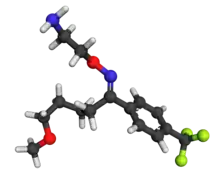
| Formula | C15H21F3N2O2 |
| Molar mass | 318.340 g·mol−1 |
| 3D model (JSmol) | |
| |
| |
  (what is this?) (verify) (what is this?) (verify) | |
Fluvoxamine's side-effect profile is very similar to other SSRIs: constipation, gastrointestinal problems, headache, anxiety, irritation, sexual problems, dry mouth, sleep problems and a risk of suicide at the start of treatment by lifting the psychomotor inhibition, but these effects appear to be significantly weaker than with other SSRIs (except gastrointestinal side-effects).[12] Although the many drug-drug interactions of fluvoxamine can be problematic (and may temper enthusiasm for its prescribing, advocation and usage to some), its tolerance-profile itself is actually superior in some respects to other SSRIs (particularly with respect to cardiovascular complications), despite its age.[13] Compared to escitalopram and sertraline, indeed, fluvoxamine’s gastrointestinal profile may be less intense,[14] often being limited to nausea.[15] Mosapride has demonstrated efficacy in treating fluvoxamine-induced nausea.[16] It is also advised practice to divide total daily doses of fluvoxamine greater than 100 milligrams, with the higher fraction being taken at bedtime (e.g., 50 mg at the beginning of the waking day and 200 mg at bedtime). In any case, high starting daily doses of fluvoxamine rather than the recommended gradual titration (starting at 50 milligrams and gradually titrating, up to 300 if necessary) may predispose to nauseous discomfort.
It is on the World Health Organization's List of Essential Medicines.[17]
Fluvoxamine is related to clovoxamine,[18] a proposed SNRI which has been subject to a certain amount of investigative research but was never marketed.
Medical uses
In many countries (e.g., Australia,[19][20] the UK,[21] and Russia[22]) it is commonly used for major depressive disorder. Fluvoxamine is also approved in the United States for obsessive–compulsive disorder (OCD),[23][7] and social anxiety disorder.[24] In Japan, it is also approved to treat OCD, social anxiety disorder and major depressive disorder.[25][26] Fluvoxamine is indicated for children and adolescents with OCD.[27] The NICE guidelines in the United Kingdom have, as-of 2005, authorised its use for obsessive-compulsive disorder in adults and adolescents of any age and children over the age of 7.
Fluvoxamine appears to have a quicker onset of action in the treatment of clinical depression than fluoxetine and may also improve sleep quality.[28]
Fluvoxamine is effective in the treatment of panic disorder[29] and has been compared to inositol in this regard.[30]
There is strong evidence that fluvoxamine may help some people with negative symptoms of chronic schizophrenia.[31][32][33] It also synergises well with clozapine[34] and reduce the dosage of clozapine needed, thus decreasing its side-effects, including averse metabolic effects (e.g., weight-gain).[35][36]
Fluvoxamine is effective for generalised social anxiety in adults.[37]
Fluvoxamine may also reduce the overall intensity of rapid, interpersonally-bound mood-shifts that are characteristic of borderline personality disorder,[38] analogous to the way fluoxetine (Prozac) may reduce anger specifically in these patients.[39] Typical neuroleptic trifluoperazine, also related to the broad trifluoromethyl functional group,[40] has been associated with more general improvement in the treatment of borderline personality disorder.[41]
There is tentative, yet ever-amounting, evidence that fluvoxamine may significantly reduce the overall morbidity of COVID-19 and complications thereof.[42][43][44][45][46]
Fluvoxamine has been investigated for its use in reducing the urge to gamble in pathological gambling, with favourable, albeit tentative, results.[47][48][49] It has also been measured against and compared to topiramate in this regard,[50] with the study outlining some efficacy for both drugs.
Although the evidence for certain key antidepressants (e.g., fluvoxamine, clomipramine, maprotiline, fluoxetine) having any worth in the treatment of cancer is extremely tentative at best, increasing research has provisionally borne their effectiveness in reducing certain elements of it. In the case of fluvoxamine, it may or may not come to assume a certain place in the treatment of colon cancer.[51][52] Paclitaxel (Px) is a chemotherapeutic agent for the treatment of various types of cancer. Here, fluvoxamine has been demonstrated to reduce various side-effects resulting from its utilisation, including paclitaxel-induced neurotoxicity.[53]
It has been tentatively-investigated in the treatment of prostatodynia, a male somatoform pain disorder marked by urogenital pain and urinary difficulties and which represents a rare factor in the differential diagnosis of more primary chronic prostatitis. It may be a viable treatment here when more conventional treatments have failed.[54]
Fluvoxamine appears to have potent anti-inflammatory qualities and may have potential in the treatment of arthritis[55][56] and certain types of pulmonary fibrosis.[57][58] This may be related to its status as a sigma-1 (σ1) agonist, and it may be this effect which contributes, also, to its potential role in ameliorating fibrotic dysfunction in the kidneys.[59]
An open-label indication was granted to fluvoxamine in one instance for the treatment of the delusional variant of body dysmorphia, with tentative success.[60]
Fluvoxamine is also effective for treating a range of anxiety disorders in children and adolescents, including generalized anxiety disorder, social anxiety disorder, panic disorder and separation anxiety disorder.[61][62][63]
The drug works long-term, and retains its therapeutic efficacy for at least one year.[64] It has also been found to possess some analgesic properties in line with other SSRIs and tricyclic antidepressants.[65][66][67]
Adverse effects
Gastrointestinal side effects are more solely characteristic of those receiving treatment with fluvoxamine. Otherwise, fluvoxamine's side-effect profile is very similar to other SSRIs’.[3][23][19][21][68][69]
Common (1–10% incidence) adverse effects
- Abdominal pain
- Agitation
- Anxiety
- Asthenia (weakness)
- Constipation
- Diarrhea
- Dizziness
- Dyspepsia (indigestion)
- Headache
- Hyperhidrosis (excess sweating)
- Insomnia
- Loss of appetite
- Malaise
- Nausea
- Nervousness
- Palpitations
- Restlessness
- Sexual dysfunction (including delayed ejaculation, erectile dysfunction, decreased libido, etc.)
- Somnolence (drowsiness)
- Tachycardia (high heart rate)
- Tremor
- Vomiting
- Weight loss
- Xerostomia (dry mouth)
- Yawning
Uncommon (0.1–1% incidence) adverse effects
- Arthralgia
- Confusional state
- Cutaneous hypersensitivity reactions (e.g. oedema [buildup of fluid in the tissues], rash, pruritus)
- Extrapyramidal side effects (e.g. dystonia, parkinsonism, tremor, etc.)
- Hallucination
- Orthostatic hypotension
Rare (0.01–0.1% incidence) adverse effects
- Abnormal hepatic (liver) function
- Galactorrhoea (expulsion of breast milk unrelated to pregnancy or breastfeeding)
- Mania
- Photosensitivity (being abnormally sensitive to light)
- Seizures
Unknown frequency adverse effects
- Akathisia – a sense of inner restlessness that presents itself with the inability to stay still
- Bed-wetting
- Bone fractures
- Dysgeusia
- Ecchymoses
- Glaucoma
- Haemorrhage
- Hyperprolactinaemia (elevated plasma prolactin levels leading to galactorrhoea, amenorrhoea [cessation of menstrual cycles], etc.)
- Hyponatraemia
- Mydriasis
- Neuroleptic malignant syndrome – practically identical presentation to serotonin syndrome except with a more prolonged onset
- Paraesthesia
- Serotonin syndrome – a potentially fatal condition characterised by abrupt onset muscle rigidity, hyperthermia (elevated body temperature), rhabdomyolysis, mental status changes (e.g. coma, hallucinations, agitation), etc.
- Suicidal ideation and behaviour
- Syndrome of inappropriate antidiuretic hormone secretion
- Urinary incontinence
- Urinary retention
- Violence towards others[70]
- Weight changes
- Withdrawal symptoms
Interactions
Fluvoxamine inhibits the following cytochrome P450 enzymes:[71][72][73][74][75][76][77][78][79]
- CYP1A2 (strongly) which metabolizes agomelatine, amitriptyline, caffeine, clomipramine, clozapine, duloxetine, haloperidol, imipramine, phenacetin, tacrine, tamoxifen, theophylline, olanzapine, etc.
- CYP3A4 (moderately) which metabolizes alprazolam, aripiprazole, clozapine, haloperidol, quetiapine, pimozide, ziprasidone, etc.[80]
- CYP2D6 (weakly) which metabolizes aripiprazole, chlorpromazine, clozapine, codeine, fluoxetine, haloperidol, olanzapine, oxycodone, paroxetine, perphenazine, pethidine, risperidone, sertraline, thioridazine, zuclopenthixol, etc.[81]
- CYP2C9 (moderately) which metabolizes nonsteroidal anti-inflammatory drugs, phenytoin, sulfonylureas, etc.
- CYP2C19 (strongly) which metabolizes clonazepam, diazepam, phenytoin, etc.
- CYP2B6 (weakly) which metabolizes bupropion, cyclophosphamide, sertraline, tamoxifen, valproate, etc.
By so doing, fluvoxamine can increase serum concentration of the substrates of these enzymes.[71]
Fluvoxamine may also elevate plasma levels of olanzapine by approximately two times.[82] Combined olanzapine and fluvoxamine, which may cause increased sedation,[83] should be used cautiously and controlled clinically and by therapeutic drug monitoring to avoid olanzapine induced adverse effects and/or intoxication.[84][85]
The plasma levels of oxidatively metabolized benzodiazepines (e.g., triazolam, midazolam, alprazolam and diazepam) are likely to be increased when co-administered with fluvoxamine. However, the clearance of benzodiazepines metabolized by glucuronidation (e.g., lorazepam; oxazepam, which is co-incidentally a metabolite of diazepam;[86] temazepam)[87][88] are not affected by fluvoxamine and may be safely taken alongside fluvoxamine should concurrent treatment with a benzodiazepine be necessary.[89] Additionally, it appears that benzodiazepines metabolized by nitro-reduction (clonazepam, nitrazepam) may also, in a somewhat similar vein, be unlikely to be affected by fluvoxamine.[90][91] Concurrent use of diazepam (Valium) is generally inadvisable and should probably not be done.
Using fluvoxamine and alprazolam together can increase alprazolam plasma concentrations.[92] If alprazolam is coadministered with fluvoxamine, the initial alprazolam dose should be reduced to the lowest effective dose.[93][94]
Fluvoxamine and ramelteon coadministration is not indicated.[95][96]
Fluvoxamine has been observed to increase serum concentrations of mirtazapine, which is mainly metabolized by CYP1A2, CYP2D6, and CYP3A4, by three- to four-fold in humans.[97] Caution and adjustment of dosage as necessary are warranted when combining fluvoxamine and mirtazapine.[97]
Fluvoxamine seriously affects the pharmacokinetics of tizanidine and increases the intensity and duration of its effects. Because of the potentially hazardous consequences, the concomitant use of tizanidine with fluvoxamine, or other potent inhibitors of CYP1A2, should be avoided.[98]
When a beta-blocker is required, atenolol,[99] pindolol[100][101][102] and, possibly, metoprolol[103][104][105][106]) may be safer choices than propranolol, as the latter’s metabolism is seriously, potentially dangerously, inhibited by fluvoxamine.[107] Indeed, fluvoxamine may increase propranolol blood-levels by five-fold.[108]
Anecdotally, more has been spoken about or (rightfully) assumed regarding the mutual compatibility of fluvoxamine and atenolol but the case may be similar with the other-two beta-blockers mentioned herein, also. This may be especially promising in the case of pindolol, when patients with obsessive-compulsive disorder especially, a principal indication for fluvoxamine, need a beta-blocker for hypertensive/cardiac reasons or may benefit from it for additional augmentation.
Clomipramine increases fluvoxamine levels and, conversely-likewise, fluvoxamine increases clomipramine levels (thereby its serotoninergic potential) and inhibits its metabolism to its strongly-noradrenergic metabolite, norclomipramine.[109] Although the two drugs can certainly be prescribed and taken concurrently quite safely, and often are in the case of certain characteristic obsessional complexes,[110] the inter-pharmacology between these two drugs is rather complex and caution is needed in doing this (often necessitating a lower dose of one or the other) to keep blood-levels of the two agents within acceptable levels and avoid serotonin-toxicity. Even-greater caution is needed when combining clomipramine with drugs which inhibit CYP2D6 (e.g., fluoxetine, paroxetine), if it has to be done at all, as ’2D6-inhibition may do the opposite of fluvoxamine and increase desmethylclomipramine levels to an uncomfortable extent.
Pharmacology
| Site | Ki (nM) |
|---|---|
| SERTTooltip Serotonin transporter | 2.5 |
| NETTooltip Norepinephrine transporter | 1,427 |
| 5-HT2C | 5,786 |
| α1-adrenergic | 1,288 |
| σ1 | 36 |
Fluvoxamine is a potent selective serotonin reuptake inhibitor with around 100-fold affinity for the serotonin transporter over the norepinephrine transporter.[72] It has negligible affinity for the dopamine transporter or any other site, with the sole exception of the σ1 receptor.[114][13] It behaves as a potent agonist at this receptor and has the highest affinity (36 nM) of any SSRI for doing so.[114] This may contribute to its antidepressant and anxiolytic effects and may also afford it some efficacy in treating the cognitive symptoms of depression.[115] Unlike some other SSRIs, fluvoxamine's metabolites are pharmacologically neutral.[116]
History
Fluvoxamine was developed by Kali-Duphar,[117] part of Solvay Pharmaceuticals, Belgium, now Abbott Laboratories, and introduced as Floxyfral in Switzerland in 1983.[117] It was approved by the U.S. Food and Drug Administration (FDA) in 1994, and introduced as Luvox in the US.[118] In India, it is available, among several other brands, as Uvox by Abbott.[119] It was one of the first SSRI antidepressants to be launched, and is prescribed in many countries to patients with major depression.[120] It was the first SSRI, a non-TCA drug, approved by the U.S. FDA specifically for the treatment of OCD.[121] At the end of 1995, more than ten million patients worldwide had been treated with fluvoxamine.[122] Fluvoxamine was the first SSRI to be registered for the treatment of obsessive compulsive disorder in children by the FDA in 1997.[123] In Japan, fluvoxamine was the first SSRI to be approved for the treatment of depression in 1999[124][125] and was later in 2005 the first drug to be approved for the treatment of social anxiety disorder.[126] Fluvoxamine was the first SSRI approved for clinical use in the United Kingdom.[127] Manufacturers include BayPharma, Synthon, and Teva, among others.[128]
Research
COVID-19
There is tentative evidence fluvoxamine might be useful for reducing COVID-19 disease severity if given as an early treatment.[129][130][131] In Canada, Ontario's COVID-19 Advisory had approved it for usage if other preferred treatments were unavailable.[132]
In May 2022, based on a review of available scientific evidence, the U.S. Food and Drug Administration (FDA) chose not to issue an emergency use authorization covering the use of fluvoxamine to treat COVID-19, saying that, at the time, the data was not sufficient to conclude that fluvoxamine may be effective in treating non-hospitalized people with COVID-19 to prevent serious illness or hospitalization. The agency stated that study results suggest that further clinical trials may be warranted.[133][134]
Environment
Fluvoxamine is a common finding in waters near human settlement.[135] Christensen et al. 2007 finds it is "very toxic to aquatic organisms" by European Union standards.[135]
References
- Use During Pregnancy and Breastfeeding
- Anvisa (31 March 2023). "RDC Nº 784 - Listas de Substâncias Entorpecentes, Psicotrópicas, Precursoras e Outras sob Controle Especial" [Collegiate Board Resolution No. 784 - Lists of Narcotic, Psychotropic, Precursor, and Other Substances under Special Control] (in Brazilian Portuguese). Diário Oficial da União (published 4 April 2023). Archived from the original on 3 August 2023. Retrieved 16 August 2023.
- "Product Information Luvox". TGA eBusiness Services. Abbott Australasia Pty Ltd. 15 January 2013. Retrieved 21 October 2013.
- van Harten J (March 1993). "Clinical pharmacokinetics of selective serotonin reuptake inhibitors". Clinical Pharmacokinetics. 24 (3): 203–20. doi:10.2165/00003088-199324030-00003. PMID 8384945. S2CID 84636672.
- "Luvox". ChemSpider. Royal Society of Chemistry. Archived from the original on 15 November 2013. Retrieved 21 October 2013.
- "Fluvoxamine Maleate Information". U.S. Food and Drug Administration (FDA). 15 July 2015. Archived from the original on 29 November 2019. Retrieved 28 November 2019.
- McCain JA (July 2009). "Antidepressants and suicide in adolescents and adults: a public health experiment with unintended consequences?". P & T. 34 (7): 355–378. PMC 2799109. PMID 20140100.
- "Fluvoxamine for the treatment of anxiety disorders in children and adolescents. The Research Unit on Pediatric Psychopharmacology Anxiety Study Group". The New England Journal of Medicine. 344 (17): 1279–1285. April 2001. doi:10.1056/NEJM200104263441703. PMID 11323729.
- Figgitt DP, McClellan KJ (October 2000). "Fluvoxamine. An updated review of its use in the management of adults with anxiety disorders". Drugs. 60 (4): 925–954. doi:10.2165/00003495-200060040-00006. PMID 11085201.
- Irons J (December 2005). "Fluvoxamine in the treatment of anxiety disorders". Neuropsychiatric Disease and Treatment. 1 (4): 289–299. PMC 2424117. PMID 18568110.
- Asnis GM, Hameedi FA, Goddard AW, Potkin SG, Black D, Jameel M, et al. (5 August 2001). "Fluvoxamine in the treatment of panic disorder: a multi-center, double-blind, placebo-controlled study in outpatients". Psychiatry Research. 103 (1): 1–14. doi:10.1016/S0165-1781(01)00265-7. ISSN 0165-1781. PMID 11472786. S2CID 40412606.
- Vezmar, S. et al., « Pharmacokinetics and Efficacy of Fluvoxamine and Amitriptyline in Depression », J Pharmacol Sci, vol. 110, no 1, 2009, p. 98 – 104 (ISSN 1347-8648)
- Westenberg HG, Sandner C (April 2006). "Tolerability and safety of fluvoxamine and other antidepressants". International Journal of Clinical Practice. 60 (4): 482–491. doi:10.1111/j.1368-5031.2006.00865.x. PMC 1448696. PMID 16620364.
- Oliva V, Lippi M, Paci R, Del Fabro L, Delvecchio G, Brambilla P, et al. (July 2021). "Gastrointestinal side effects associated with antidepressant treatments in patients with major depressive disorder: A systematic review and meta-analysis". Progress in Neuro-Psychopharmacology & Biological Psychiatry. Elsevier BV. 109: 110266. doi:10.1016/j.pnpbp.2021.110266. PMID 33549697.
- Irons J. Fluvoxamine in the treatment of anxiety disorders. Neuropsychiatr Dis Treat. 2005 Dec;1(4):289-99. PMID: 18568110; PMCID: PMC2424117.
- Ueda N, Yoshimura R, Shinkai K, Terao T, Nakamura J (November 2001). "Characteristics of fluvoxamine-induced nausea". Psychiatry Research. Elsevier BV. 104 (3): 259–264. doi:10.1016/s0165-1781(01)00320-1. PMID 11728615.
- World Health Organization (2021). World Health Organization model list of essential medicines: 22nd list (2021). Geneva: World Health Organization. hdl:10665/345533. WHO/MHP/HPS/EML/2021.02.
- Saletu B, Grünberger J, Rajna P, Karobath M (1980). "Clovoxamine and fluvoxamine-2 biogenic amine re-uptake inhibiting antidepressants: quantitative EEG, psychometric and pharmacokinetic studies in man". Journal of Neural Transmission. Springer Science and Business Media LLC. 49 (1–2): 63–86. doi:10.1007/bf01249190. PMID 6777458.
- Rossi S, ed. (2013). Australian Medicines Handbook (2013 ed.). Adelaide: The Australian Medicines Handbook Unit Trust. ISBN 978-0-9805790-9-3.
- "Luvox Tablets". NPS MedicineWise. Retrieved 22 October 2018.
- Joint Formulary Committee (2013). British National Formulary (BNF) (65 ed.). London, UK: Pharmaceutical Press. ISBN 978-0-85711-084-8.
- "Summary of Full Prescribing Information: Fluvoxamine". Drug Registry of Russia (RLS) Drug Compendium (in Russian). Retrieved 21 March 2015.
- "Fluvoxamine Maleate tablet, coated prescribing information". DailyMed. 14 December 2018. Retrieved 28 November 2019.
- "Luvox CR approved for OCD and SAD". MPR. 29 February 2008. Retrieved 2 March 2019.
- "2005 News Releases". Astellas Pharma. Archived from the original on 16 September 2018. Retrieved 16 September 2018.
- "International Approvals: Ebixa, Depromel/Luvox, M-Vax". www.medscape.com. Retrieved 16 September 2018.
- "Fluvoxamine Product Insert" (PDF). Jazz Pharmaceuticals, Inc. U.S. Food and Drug Administration. March 2005.
- Dalery J, Honig A. Fluvoxamine versus fluoxetine in major depressive episode: a double-blind randomised comparison. Hum Psychopharmacol. 2003 Jul;18(5):379-84. doi: 10.1002/hup.490. PMID: 12858325.
- Asnis GM, Hameedi FA, Goddard AW, Potkin SG, Black D, Jameel M, Desagani K, Woods SW. Fluvoxamine in the treatment of panic disorder: a multi-center, double-blind, placebo-controlled study in outpatients. Psychiatry Res. 2001 Aug 5;103(1):1-14. doi: 10.1016/s0165-1781(01)00265-7. PMID: 11472786.
- Palatnik A, Frolov K, Fux M, Benjamin J. Double-blind, controlled, crossover trial of inositol versus fluvoxamine for the treatment of panic disorder. J Clin Psychopharmacol. 2001 Jun;21(3):335-9. doi: 10.1097/00004714-200106000-00014. PMID: 11386498.
- Silver H (2001). "Fluvoxamine as an adjunctive agent in schizophrenia". CNS Drug Reviews. 7 (3): 283–304. doi:10.1111/j.1527-3458.2001.tb00200.x. PMC 6741705. PMID 11607044.
- Polcwiartek C, Nielsen J (March 2016). "The clinical potentials of adjunctive fluvoxamine to clozapine treatment: a systematic review". Psychopharmacology. 233 (5): 741–50. doi:10.1007/s00213-015-4161-1. PMID 26626327. S2CID 12168939.
- Hirakawa H, Terao T, Tanaka T, Sato H, Yoshimura R. A Case of Mutism in Noncatatonic Schizophrenia Responding to Small Dose of Fluvoxamine Addition to Clozapine. J Clin Psychopharmacol. 2016 Oct;36(5):531-2. doi: 10.1097/JCP.0000000000000552. PMID: 27508430.
- Leising J, Barr AM, Procyshyn RM, Ainsworth NJ, White RF, Honer W, Vila-Rodriguez F. High-Dose Fluvoxamine Augmentation to Clozapine in Treatment-Resistant Psychosis. J Clin Psychopharmacol. 2021 Mar-Apr 01;41(2):186-190. doi: 10.1097/JCP.0000000000001342. PMID: 33587389.
- Polcwiartek C, Nielsen J. The clinical potentials of adjunctive fluvoxamine to clozapine treatment: a systematic review. Psychopharmacology (Berl). 2016 Mar;233(5):741-50. doi: 10.1007/s00213-015-4161-1. Epub 2015 Dec 2. PMID: 26626327.
- Berel, C., Mossé, U., Wils, J., Cousin, L., Imbert, L., Gerardin, P., Chaumette, B., Lamoureux, F. and Ferrafiat, V., 2021. Interest of fluvoxamine as an add-on to clozapine in children with severe psychiatric disorder according to CYP polymorphisms: experience from a case series. Frontiers in Psychiatry, 12, p.669446.
- Williams T, Hattingh CJ, Kariuki CM, Tromp SA, van Balkom AJ, Ipser JC, Stein DJ (October 2017). "Pharmacotherapy for social anxiety disorder (SAnD)". The Cochrane Database of Systematic Reviews. 10 (10): CD001206. doi:10.1002/14651858.CD001206.pub3. PMC 6360927. PMID 29048739.
- Rinne T, van den Brink W, Wouters L, van Dyck R. SSRI treatment of borderline personality disorder: a randomized, placebo-controlled clinical trial for female patients with borderline personality disorder. Am J Psychiatry. 2002 Dec;159(12):2048-54. doi: 10.1176/appi.ajp.159.12.2048. PMID: 12450955.
- Salzman C, Wolfson AN, Schatzberg A, Looper J, Henke R, Albanese M, Schwartz J, Miyawaki E. Effect of fluoxetine on anger in symptomatic volunteers with borderline personality disorder. J Clin Psychopharmacol. 1995 Feb;15(1):23-9. doi: 10.1097/00004714-199502000-00005. PMID: 7714224.
- Matarrese M, Soloviev D, Todde S, Magni F, Colombo D, Galli Kienle M, Fazio F. Synthesis of [O-methyl-11C]fluvoxamine--a potential serotonin uptake site radioligand. Appl Radiat Isot. 1997 Jun;48(6):749-54. doi: 10.1016/s0969-8043(96)00304-1. PMID: 9204526.
- Cowdry RW, Gardner DL. Pharmacotherapy of borderline personality disorder. Alprazolam, carbamazepine, trifluoperazine, and tranylcypromine. Arch Gen Psychiatry. 1988 Feb;45(2):111-9. doi: 10.1001/archpsyc.1988.01800260015002. PMID: 3276280.
- Wen W, Chen C, Tang J, Wang C, Zhou M, Cheng Y, Zhou X, Wu Q, Zhang X, Feng Z, Wang M, Mao Q. Efficacy and safety of three new oral antiviral treatment (molnupiravir, fluvoxamine and Paxlovid) for COVID-19:a meta-analysis. Ann Med. 2022 Dec;54(1):516-523. doi: 10.1080/07853890.2022.2034936. PMID: 35118917; PMCID: PMC8820829.
- Reis G, Dos Santos Moreira-Silva EA, Silva DCM, Thabane L, Milagres AC, Ferreira TS, Dos Santos CVQ, de Souza Campos VH, Nogueira AMR, de Almeida APFG, Callegari ED, de Figueiredo Neto AD, Savassi LCM, Simplicio MIC, Ribeiro LB, Oliveira R, Harari O, Forrest JI, Ruton H, Sprague S, McKay P, Glushchenko AV, Rayner CR, Lenze EJ, Reiersen AM, Guyatt GH, Mills EJ; TOGETHER investigators. Effect of early treatment with fluvoxamine on risk of emergency care and hospitalisation among patients with COVID-19: the TOGETHER randomised, platform clinical trial. Lancet Glob Health. 2022 Jan;10(1):e42-e51. doi: 10.1016/S2214-109X(21)00448-4. Epub 2021 Oct 28. Erratum in: Lancet Glob Health. 2022 Apr;10(4):e481. Erratum in: Lancet Glob Health. 2022 Sep;10(9):e1246. PMID: 34717820; PMCID: PMC8550952.
- Dobrodeeva V, Abdyrahmanova A, Astafeva D, Smirnova D, Cumming P, De Sousa A, Davydkin I, Yashikhina A, Shnayder N, Nasyrova R. Pharmacogenetic Aspects of COVID-19 Management and Post-COVID-19 Depression Treatment with Fluvoxamine. Psychiatr Danub. 2022 Sep;34(Suppl 8):25-30. PMID: 36170697.
- Lu LC, Chao CM, Chang SP, Lan SH, Lai CC. Effect of fluvoxamine on outcomes of nonhospitalized patients with COVID-19: A systematic review and meta-analysis. J Infect Public Health. 2022 Oct 13;15(11):1259-1264. doi: 10.1016/j.jiph.2022.10.010. Epub ahead of print. PMID: 36272390; PMCID: PMC9556767.
- Arishi NA, Althomali NM, Dighriri IM, Alharthi MS, Alqurashi GB, Musharraf RA, Albuhayri AH, Almalki MK, Alnami SA, Mashraqi ZO. An Overview of Fluvoxamine and its Use in SARS-CoV-2 Treatment. Cureus. 2023 Jan 24;15(1):e34158. doi: 10.7759/cureus.34158. PMID: 36843775; PMCID: PMC9949685.
- Blanco C, Petkova E, Ibáñez A, Sáiz-Ruiz J. A pilot placebo-controlled study of fluvoxamine for pathological gambling. Ann Clin Psychiatry. 2002 Mar;14(1):9-15. doi: 10.1023/a:1015215809770. PMID: 12046642.
- Hollander E, DeCaria CM, Mari E, Wong CM, Mosovich S, Grossman R, Begaz T. Short-term single-blind fluvoxamine treatment of pathological gambling. Am J Psychiatry. 1998 Dec;155(12):1781-3. doi: 10.1176/ajp.155.12.1781. PMID: 9842795.
- Hollander E, DeCaria CM, Finkell JN, Begaz T, Wong CM, Cartwright C. A randomized double-blind fluvoxamine/placebo crossover trial in pathologic gambling. Biol Psychiatry. 2000 May 1;47(9):813-7. doi: 10.1016/s0006-3223(00)00241-9. PMID: 10812040.
- Dannon PN, Lowengrub K, Gonopolski Y, Musin E, Kotler M. Topiramate versus fluvoxamine in the treatment of pathological gambling: a randomized, blind-rater comparison study. Clin Neuropharmacol. 2005 Jan-Feb;28(1):6-10. doi: 10.1097/01.wnf.0000152623.46474.07. PMID: 15711432.
- Kumar P, Kumar M, Gautam AK, Sonkar AB, Verma A, Singh A, Nisha R, Kumar U, Kumar D, Mahata T, Bhattacharya B, Maity B, Pandeya A, Gosipatala SB, Saha S. Ameliorative effect of fluvoxamine against colon carcinogenesis via COX-2 blockade with oxidative and metabolic stress reduction at the cellular, molecular and metabolic levels. BBA Adv. 2022 Feb 17;2:100046. doi: 10.1016/j.bbadva.2022.100046. PMID: 37082584; PMCID: PMC10074870.
- Wei P, Jia H, Li R, Zhang C, Guo S, Wei S, Sun K, Cheng S, Cui T, Huang J, Guo S, Guo J, Yang Z, Zhong J, Lu C, Feng Z, Zhao T. Fluvoxamine prompts the antitumor immune effect via inhibiting the PD-L1 expression on mice-burdened colon tumor. Cell Biol Int. 2023 Feb;47(2):439-450. doi: 10.1002/cbin.11936. Epub 2022 Oct 19. PMID: 36259746.
- Tanimukai H, Kudo T. Fluvoxamine alleviates paclitaxel-induced neurotoxicity. Biochem Biophys Rep. 2015 Sep 25;4:202-206. doi: 10.1016/j.bbrep.2015.09.014. PMID: 29124205; PMCID: PMC5668922.
- Turkington D, Grant JB, Ferrier IN, Rao NS, Linsley KR, Young AH. A randomized controlled trial of fluvoxamine in prostatodynia, a male somatoform pain disorder. J Clin Psychiatry. 2002 Sep;63(9):778-81. doi: 10.4088/jcp.v63n0905. PMID: 12363117.
- Ahsan H, Ayub M, Irfan HM, Saleem M, Anjum I, Haider I, Asif A, Abbas SQ, Ul Hulassan SS. Tumor necrosis factor-alpha, prostaglandin-E2 and interleukin-1β targeted anti-arthritic potential of fluvoxamine: drug repurposing. Environ Sci Pollut Res Int. 2023 Feb;30(6):14580-14591. doi: 10.1007/s11356-022-23142-1. Epub 2022 Sep 24. PMID: 36152089.
- Riesner HJ, Zeitler C, Schreiber H, Wild A. Eine additive Therapie chronischer Schmerzen bei fortgeschrittener Gon-/Coxarthrose mit dem selektiven Serotonin-Reuptake-Hemmer Fluvoxamin (Fevarin) [Additional treatment in chronic pain syndrome due to hip and knee arthritis with the selective serotonin reuptake inhibitor fluvoxamine (Fevarin]. Z Orthop Unfall. 2008 Nov-Dec;146(6):742-6. German. doi: 10.1055/s-2008-1039038. Epub 2008 Dec 12. PMID: 19085723.
- Xie X, Wu X, Zhao D, Liu Y, Du Q, Li Y, Xu Y, Li Y, Qiu Y, Yang Y. Fluvoxamine alleviates bleomycin-induced lung fibrosis via regulating the cGAS-STING pathway. Pharmacol Res. 2023 Jan;187:106577. doi: 10.1016/j.phrs.2022.106577. Epub 2022 Nov 23. PMID: 36435270.
- Hodrea J, Tran MN, Besztercei B, Medveczki T, Szabo AJ, Őrfi L, Kovacs I, Fekete A. Sigma-1 Receptor Agonist Fluvoxamine Ameliorates Fibrotic Response of Trabecular Meshwork Cells. Int J Mol Sci. 2023 Jul 19;24(14):11646. doi: 10.3390/ijms241411646. PMID: 37511406; PMCID: PMC10380218.
- Hodrea J, Tran MN, Besztercei B, Medveczki T, Szabo AJ, Őrfi L, Kovacs I, Fekete A. Sigma-1 Receptor Agonist Fluvoxamine Ameliorates Fibrotic Response of Trabecular Meshwork Cells. Int J Mol Sci. 2023 Jul 19;24(14):11646. doi: 10.3390/ijms241411646. PMID: 37511406; PMCID: PMC10380218.
- Phillips KA, McElroy SL, Dwight MM, Eisen JL, Rasmussen SA. Delusionality and response to open-label fluvoxamine in body dysmorphic disorder. J Clin Psychiatry. 2001 Feb;62(2):87-91. doi: 10.4088/jcp.v62n0203. PMID: 11247107; PMCID: PMC4096700.
- "Antidepressants for children and teenagers: what works for anxiety and depression?". NIHR Evidence (Plain English summary). National Institute for Health and Care Research. 3 November 2022. doi:10.3310/nihrevidence_53342. S2CID 253347210.
- Boaden K, Tomlinson A, Cortese S, Cipriani A (2 September 2020). "Antidepressants in Children and Adolescents: Meta-Review of Efficacy, Tolerability and Suicidality in Acute Treatment". Frontiers in Psychiatry. 11: 717. doi:10.3389/fpsyt.2020.00717. PMC 7493620. PMID 32982805.
- Correll CU, Cortese S, Croatto G, Monaco F, Krinitski D, Arrondo G, et al. (June 2021). "Efficacy and acceptability of pharmacological, psychosocial, and brain stimulation interventions in children and adolescents with mental disorders: an umbrella review". World Psychiatry. 20 (2): 244–275. doi:10.1002/wps.20881. PMC 8129843. PMID 34002501.
- Wilde MI, Plosker GL, Benfield P (November 1993). "Fluvoxamine. An updated review of its pharmacology, and therapeutic use in depressive illness". Drugs. 46 (5): 895–924. doi:10.2165/00003495-199346050-00008. PMID 7507038.
- Kwasucki J, Stepień A, Maksymiuk G, Olbrych-Karpińska B (2002). "Evaluation of analgesic action of fluvoxamine compared with efficacy of imipramine and tramadol for treatment of sciatica – open trial". Wiadomosci Lekarskie. 55 (1–2): 42–50. PMID 12043315.
- Schreiber S, Pick CG (August 2006). "From selective to highly selective SSRIs: a comparison of the antinociceptive properties of fluoxetine, fluvoxamine, citalopram and escitalopram". European Neuropsychopharmacology. 16 (6): 464–8. doi:10.1016/j.euroneuro.2005.11.013. PMID 16413173. S2CID 39278756.
- Coquoz D, Porchet HC, Dayer P (September 1993). "Central analgesic effects of desipramine, fluvoxamine, and moclobemide after single oral dosing: a study in healthy volunteers". Clinical Pharmacology and Therapeutics. 54 (3): 339–44. doi:10.1038/clpt.1993.156. PMID 8375130. S2CID 8229797.
- Taylor D, Paton C, Shitij K (2012). The Maudsley prescribing guidelines in psychiatry. West Sussex: Wiley-Blackwell. ISBN 978-0-470-97948-8.
- "Faverin 100 mg film-coated tablets – Summary of Product Characteristics (SPC)". electronic Medicines Compendium. Abbott Healthcare Products Limited. 14 May 2013. Retrieved 21 October 2013.
- Szalavitz M (7 January 2011). "Top Ten Legal Drugs Linked to Violence". Time. Retrieved 10 September 2014.
- Ciraulo DA, Shader RI (2011). Ciraulo DA, Shader RI (eds.). Pharmacotherapy of Depression (2nd ed.). Springer. p. 49. doi:10.1007/978-1-60327-435-7. ISBN 978-1-60327-435-7.
- Brunton L, Chabner B, Knollman B (2010). Goodman and Gilman's The Pharmacological Basis of Therapeutics (12th ed.). New York: McGraw-Hill Professional. ISBN 978-0-07-162442-8.
- Baumann P (December 1996). "Pharmacokinetic-pharmacodynamic relationship of the selective serotonin reuptake inhibitors". Clinical Pharmacokinetics. 31 (6): 444–69. doi:10.2165/00003088-199631060-00004. PMID 8968657. S2CID 31923953.
- DeVane CL, Gill HS (1997). "Clinical pharmacokinetics of fluvoxamine: applications to dosage regimen design". The Journal of Clinical Psychiatry. 58 (Suppl 5): 7–14. PMID 9184622.
- DeVane CL (1998). "Translational pharmacokinetics: current issues with newer antidepressants". Depression and Anxiety. 8 (Suppl 1): 64–70. doi:10.1002/(SICI)1520-6394(1998)8:1+<64::AID-DA10>3.0.CO;2-S. PMID 9809216. S2CID 22297498.
- Bondy B, Spellmann I (March 2007). "Pharmacogenetics of antipsychotics: useful for the clinician?". Current Opinion in Psychiatry. 20 (2): 126–30. doi:10.1097/YCO.0b013e328017f69f. PMID 17278909. S2CID 23859992.
- Kroon LA (September 2007). "Drug interactions with smoking". American Journal of Health-System Pharmacy. 64 (18): 1917–21. doi:10.2146/ajhp060414. PMID 17823102.
- Waknine Y (13 April 2007). "Prescribers Warned of Tizanidine Drug Interactions". Medscape News. Medscape. Retrieved 1 February 2008.
- "Fluvoxamine (Oral Route) Precautions". Mayo Clinic. Retrieved 2 November 2018.
- Hemeryck A, Belpaire FM (February 2002). "Selective serotonin reuptake inhibitors and cytochrome P-450 mediated drug-drug interactions: an update". Current Drug Metabolism. 3 (1): 13–37. doi:10.2174/1389200023338017. PMID 11876575.
- "Drug Development and Drug Interactions: Table of Substrates, Inhibitors and Inducers". FDA. 26 May 2021.
- Spina E, de Leon J (January 2007). "Metabolic drug interactions with newer antipsychotics: a comparative review". Basic & Clinical Pharmacology & Toxicology. 100 (1): 4–22. doi:10.1111/j.1742-7843.2007.00017.x. PMID 17214606.
- Bogetto F, Bellino S, Vaschetto P, Ziero S. Olanzapine augmentation of fluvoxamine-refractory obsessive-compulsive disorder (OCD): a 12-week open trial. Psychiatry Res. 2000 Oct 30;96(2):91-8. doi: 10.1016/s0165-1781(00)00203-1. PMID: 11063782.
- Hiemke C, Peled A, Jabarin M, Hadjez J, Weigmann H, Härtter S, et al. (October 2002). "Fluvoxamine augmentation of olanzapine in chronic schizophrenia: pharmacokinetic interactions and clinical effects". Journal of Clinical Psychopharmacology. 22 (5): 502–506. doi:10.1097/00004714-200210000-00010. PMID 12352274. S2CID 38073367.
- "Movox". NPS MedicineWise. 23 November 2020. Retrieved 4 November 2022.
- Dinis-Oliveira RJ. Metabolic profile of oxazepam and related benzodiazepines: clinical and forensic aspects. Drug Metab Rev. 2017 Nov;49(4):451-463. doi: 10.1080/03602532.2017.1377223. Epub 2017 Sep 14. PMID: 28903606.
- Raouf M (2016). Fudin J (ed.). "Benzodiazepine Metabolism and Pharmacokinetics" (PDF).
- Peppers MP (1996). "Benzodiazepines for alcohol withdrawal in the elderly and in patients with liver disease". Pharmacotherapy. 16 (1): 49–57. doi:10.1002/j.1875-9114.1996.tb02915.x. PMID 8700792. S2CID 1389910.
- "fluvoxamine maleate: PRODUCT MONOGRAPH" (PDF). 2016.
- "Luvox Data Sheet" (PDF). Medsafe, New Zealand. 2017. Archived from the original (PDF) on 29 March 2018. Retrieved 16 September 2018.
- "Faverin Tablets". NPS MedicineWise. July 2022. Retrieved 4 November 2022.
- Suzuki Y, Shioiri T, Muratake T, Kawashima Y, Sato S, Hagiwara M, Inoue Y, Shimoda K, Someya T (April 2003). "Effects of concomitant fluvoxamine on the metabolism of alprazolam in Japanese psychiatric patients: interaction with CYP2C19 mutated alleles". European Journal of Clinical Pharmacology. 58 (12): 829–33. doi:10.1007/s00228-003-0563-9. PMID 12698310. S2CID 32559753.
- Gerlach M, Warnke A, Greenhill L (2014). Psychiatric Drugs in Children and Adolescents: Basic Pharmacology and Practical Applications. Springer-Verlag Wien. p. 131. ISBN 978-3-7091-1500-8.
- Fleishaker JC, Hulst LK (1994). "A pharmacokinetic and pharmacodynamic evaluation of the combined administration of alprazolam and fluvoxamine". European Journal of Clinical Pharmacology. 46 (1): 35–9. doi:10.1007/bf00195913. PMID 8005185. S2CID 2161450.
- Obach RS, Ryder TF (August 2010). "Metabolism of ramelteon in human liver microsomes and correlation with the effect of fluvoxamine on ramelteon pharmacokinetics". Drug Metabolism and Disposition. 38 (8): 1381–91. doi:10.1124/dmd.110.034009. PMID 20478852. S2CID 8421997.
- Pandi-Perumal SR, Spence DW, Verster JC, Srinivasan V, Brown GM, Cardinali DP, Hardeland R (12 April 2011). "Pharmacotherapy of insomnia with ramelteon: safety, efficacy and clinical applications". Journal of Central Nervous System Disease. 3: 51–65. doi:10.4137/JCNSD.S1611. PMC 3663615. PMID 23861638.
- Anttila AK, Rasanen L, Leinonen EV (October 2001). "Fluvoxamine augmentation increases serum mirtazapine concentrations three- to fourfold". The Annals of Pharmacotherapy. 35 (10): 1221–3. doi:10.1345/aph.1A014. PMID 11675851. S2CID 44807359.
- Granfors MT, Backman JT, Neuvonen M, Ahonen J, Neuvonen PJ (April 2004). "Fluvoxamine drastically increases concentrations and effects of tizanidine: a potentially hazardous interaction". Clinical Pharmacology and Therapeutics. 75 (4): 331–41. doi:10.1016/j.clpt.2003.12.005. PMID 15060511. S2CID 25781307.
- Perucca E, Gatti G, Spina E (September 1994). "Clinical pharmacokinetics of fluvoxamine". Clinical Pharmacokinetics. 27 (3): 175–190. doi:10.2165/00003088-199427030-00002. PMID 7988100.
- Zanardi R, Serretti A, Rossini D, Franchini L, Cusin C, Lattuada E, et al. (September 2001). "Factors affecting fluvoxamine antidepressant activity: influence of pindolol and 5-HTTLPR in delusional and nondelusional depression". Biological Psychiatry. 50 (5): 323–330. doi:10.1016/s0006-3223(01)01118-0. PMID 11543734.
- Sluzewska A, Szczawinska K (May 1996). "The effects of pindolol addition to fluvoxamine and buspirone in chronic mild stress model of depression". Behavioural Pharmacology. 7: 105.
- Mundo E, Guglielmo E, Bellodi L (September 1998). "Effect of adjuvant pindolol on the antiobsessional response to fluvoxamine: a double-blind, placebo-controlled study". International Clinical Psychopharmacology. 13 (5): 219–224. doi:10.1097/00004850-199809000-00005. PMID 9817627.
- Belpaire FM, Wijnant P, Temmerman A, Rasmussen BB, Brøsen K (May 1998). "The oxidative metabolism of metoprolol in human liver microsomes: inhibition by the selective serotonin reuptake inhibitors". European Journal of Clinical Pharmacology. 54 (3): 261–264. doi:10.1007/s002280050456. PMID 9681670.
- Xu ZH, Xie HG, Zhou HH (October 1996). "In vivo inhibition of CYP2C19 but not CYP2D6 by fluvoxamine". British Journal of Clinical Pharmacology. 42 (4): 518–521. doi:10.1046/j.1365-2125.1996.45319.x. PMC 2042705. PMID 8904628.
- Hemeryck A, Belpaire FM (February 2002). "Selective serotonin reuptake inhibitors and cytochrome P-450 mediated drug-drug interactions: an update". Current Drug Metabolism. 3 (1): 13–37. doi:10.2174/1389200023338017. PMID 11876575.
- Belpaire FM, Wijnant P, Tammerman A, Bogaert M, Rasmussen B, Brosen K (1997). "Inhibition of the oxidative metabolism of metoprolol by selective serotonin reuptake inhibitors in human liver microsomes". Fundamental and Clinical Pharmacology. 2 (11): 147.
- van Harten J (1995). "Overview of the pharmacokinetics of fluvoxamine". Clinical Pharmacokinetics. 29 Suppl 1: 1–9. doi:10.2165/00003088-199500291-00003. PMID 8846617.
- Muscatello, M.R., Spina, E., Bandelow, B. and Baldwin, D.S., 2012. Clinically relevant drug interactions in anxiety disorders. Human Psychopharmacology: Clinical and Experimental, 27(3), pp.239-253.
- Szegedi A, Wetzel H, Leal M, Härtter S, Hiemke C. Combination treatment with clomipramine and fluvoxamine: drug monitoring, safety, and tolerability data. J Clin Psychiatry. 1996 Jun;57(6):257-64. PMID: 8666564.
- Hardy NE, Walkup JT. Clomipramine in Combination with Fluvoxamine: A Potent Medication Combination for Severe or Refractory Pediatric OCD. J Can Acad Child Adolesc Psychiatry. 2021 Nov;30(4):273-277. Epub 2021 Nov 1. PMID: 34777510; PMCID: PMC8561855.
- Ishikawa M, Ishiwata K, Ishii K, Kimura Y, Sakata M, Naganawa M, et al. (October 2007). "High occupancy of sigma-1 receptors in the human brain after single oral administration of fluvoxamine: a positron emission tomography study using [11C]SA4503". Biological Psychiatry. 62 (8): 878–83. doi:10.1016/j.biopsych.2007.04.001. PMID 17662961. S2CID 728565.
- Schatzberg AF, Nemeroff CB (2009). The American Psychiatric Publishing textbook of psychopharmacology (4th ed.). Arlington, VA: American Psychiatric Pub. p. 354. ISBN 978-1-585-62386-0. OCLC 320111564.
- Yahata M, Chiba K, Watanabe T, Sugiyama Y (September 2017). "Possibility of Predicting Serotonin Transporter Occupancy From the In Vitro Inhibition Constant for Serotonin Transporter, the Clinically Relevant Plasma Concentration of Unbound Drugs, and Their Profiles for Substrates of Transporters". Journal of Pharmaceutical Sciences. 106 (9): 2345–2356. doi:10.1016/j.xphs.2017.05.007. PMID 28501470.
- Hashimoto K (September 2009). "Sigma-1 receptors and selective serotonin reuptake inhibitors: clinical implications of their relationship". Central Nervous System Agents in Medicinal Chemistry. 9 (3): 197–204. doi:10.2174/1871524910909030197. PMID 20021354.
- Hindmarch I, Hashimoto K (April 2010). "Cognition and depression: the effects of fluvoxamine, a sigma-1 receptor agonist, reconsidered". Human Psychopharmacology. 25 (3): 193–200. doi:10.1002/hup.1106. PMID 20373470. S2CID 26491662.
- Hrdina PD (July 1991). "Pharmacology of serotonin uptake inhibitors: focus on fluvoxamine". Journal of Psychiatry & Neuroscience. 16 (2 Suppl 1): 10–8. PMC 1188307. PMID 1931931.
- Sittig's Pharmaceutical Manufacturing Encyclopedia (PDF) (3rd ed.). William Andrew. 2008. p. 1699. ISBN 978-0-8155-1526-5. Archived from the original (PDF) on 14 October 2013. Retrieved 17 October 2013.
- Leslie LK, Newman TB, Chesney PJ, Perrin JM (July 2005). "The Food and Drug Administration's deliberations on antidepressant use in pediatric patients". Pediatrics. 116 (1): 195–204. doi:10.1542/peds.2005-0074. PMC 1550709. PMID 15995053.
- "Brand Index―Fluvoxamine India". Archived from the original on 19 October 2013. Retrieved 18 October 2013.
- Omori IM, Watanabe N, Nakagawa A, Cipriani A, Barbui C, McGuire H, Churchill R, Furukawa TA (March 2010). "Fluvoxamine versus other anti-depressive agents for depression". The Cochrane Database of Systematic Reviews (3): CD006114. doi:10.1002/14651858.CD006114.pub2. PMC 4171125. PMID 20238342.
- "OCD Medication". Archived from the original on 14 October 2013. Retrieved 17 October 2013.
- "Fluvoxamine Product Monograph" (PDF). 1999.
- "Luvox Approved For Obsessive Compulsive Disorder in Children and Teens". Archived from the original on 16 January 2009. Retrieved 8 February 2014.
- Higuchi T, Briley M (February 2007). "Japanese experience with milnacipran, the first serotonin and norepinephrine reuptake inhibitor in Japan". Neuropsychiatric Disease and Treatment. 3 (1): 41–58. doi:10.2147/nedt.2007.3.1.41. PMC 2654524. PMID 19300537.
- Wishart DS, Guo AC, Oler E, Wang F, Anjum A, Peters H, et al. "Showing metabocard for Fluvoxamine (HMDB0014322)". Human Metabolome Database, HMDB. 5.0.
- "Solvay's Fluvoxamine maleate is first drug approved for the treatment of social anxiety disorder in Japan".
- Walker R, Whittlesea C, eds. (2007) [1994]. Clinical Pharmacy and Therapeutics (4th ed.). Edinburgh: Churchill Livingstone Elsevier. ISBN 978-0-7020-4293-5.
- "Fluvoxamine". www.drugbank.ca. Retrieved 22 October 2019.
- Hashimoto Y, Suzuki T, Hashimoto K (January 2022). "Mechanisms of action of fluvoxamine for COVID-19: a historical review". Molecular Psychiatry. 27 (4): 1898–1907. doi:10.1038/s41380-021-01432-3. PMC 8739627. PMID 34997196.
- Reis G, Dos Santos Moreira-Silva EA, Silva DC, Thabane L, Milagres AC, Ferreira TS, et al. (January 2022). "Effect of early treatment with fluvoxamine on risk of emergency care and hospitalisation among patients with COVID-19: the TOGETHER randomised, platform clinical trial". Lancet Glob Health. 10 (1): e42–e51. doi:10.1016/S2214-109X(21)00448-4. PMC 8550952. PMID 34717820.
- Facente SM, Reiersen AM, Lenze EJ, Boulware DR, Klausner JD (1 December 2021). "Fluvoxamine for the Early Treatment of SARS-CoV-2 Infection: A Review of Current Evidence". Drugs. 81 (18): 2081–2089. doi:10.1007/s40265-021-01636-5. ISSN 1179-1950. PMC 8633915. PMID 34851510.
- Avril T (20 January 2022). "Another old drug is being tried vs. COVID-19, and might actually help". Philadelphia Inquirer. Retrieved 21 January 2022.
- "FDA declines to authorize common antidepressant as COVID treatment". Reuters. 16 May 2022. Retrieved 18 May 2022.
- Memorandum Explaining Basis for Declining Request for Emergency Use Authorization of Fluvoxamine Maleate (PDF) (Memorandum). Food and Drug Administration. 16 May 2022. 4975580. Archived (PDF) from the original on 17 May 2022.
 This article incorporates text from this source, which is in the public domain.
 -
- • Chia MA, Lorenzi AS, Ameh I, Dauda S, Cordeiro-Araújo MK, Agee JT, et al. (May 2021). "Susceptibility of phytoplankton to the increasing presence of active pharmaceutical ingredients (APIs) in the aquatic environment: A review". Aquatic Toxicology. Elsevier. 234: 105809. doi:10.1016/j.aquatox.2021.105809. PMID 33780670. S2CID 232419482.
- • Christensen AM, Faaborg-Andersen S, Ingerslev F, Baun A (January 2007). "Mixture and single-substance toxicity of selective serotonin reuptake inhibitors toward algae and crustaceans". Environmental Toxicology and Chemistry. John Wiley & Sons, Inc. (Society of Environmental Toxicology and Chemistry (SETAC)). 26 (1): 85–91. doi:10.1897/06-219R.1. PMID 17269464. S2CID 6562531.
External links
- "Fluvoxamine". Drug Information Portal. U.S. National Library of Medicine.