One-party state
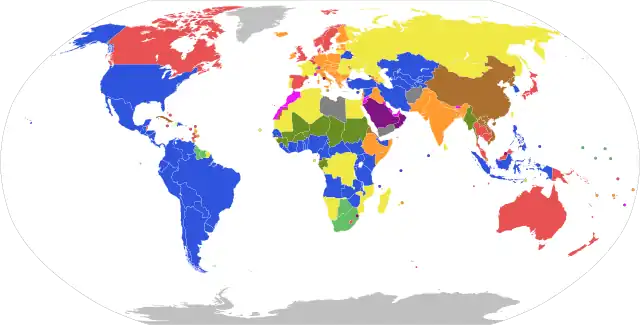
A one-party state, single-party state, one-party system or single-party system is a sovereign state in which only one political party has the right to form the government, usually based on the existing constitution.[1] All other parties are either outlawed or only enjoy limited and controlled participation in elections. Sometimes the term "de facto one-party state" is used to describe a dominant-party system that, unlike the one-party state, allows (at least nominally) democratic multiparty elections, but the existing practices or balance of political power effectively prevent the opposition from winning power.
 | |||||
| Systems of government | |||||
|---|---|---|---|---|---|
|
| Part of the Politics series |
| Party politics |
|---|
 Politics portal Politics portal |
Although it is predated by the 1714 to 1783 "age of the Whig oligarchy" in Great Britain,[2] the rule of the Committee of Union and Progress (CUP) over the Ottoman Empire following the 1913 coup d'état is often considered the first one-party state.[3]
Current one-party states
As of 2023 the following countries are legally constituted as one-party states:
| Country | Head of party | Leader title | Party | Ideology | Date of establishment | Duration | Notes |
|---|---|---|---|---|---|---|---|
 China[4] China[4] |
 |
General Secretary |  Chinese Communist Party Chinese Communist Party |
Socialism with Chinese characteristics | 1 October 1949 | 74 years, 13 days | |
 Cuba[5] Cuba[5] |
.jpg.webp) |
First Secretary |  Communist Party of Cuba Communist Party of Cuba |
Marxism–Leninism, Castroism, Guevarism, Left-wing nationalism | 16 April 1961 | 62 years, 181 days | |
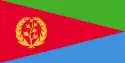 Eritrea[6] Eritrea[6] |
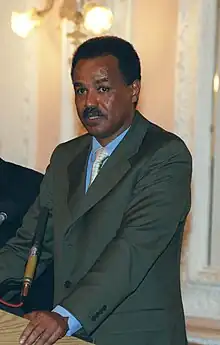 |
Chairperson |  People's Front for Democracy and Justice People's Front for Democracy and Justice |
Eritrean nationalism, Statism | 24 May 1993 | 30 years, 143 days | |
 Laos[7] Laos[7] |
 |
General Secretary |  Lao People's Revolutionary Party Lao People's Revolutionary Party |
Kaysone Phomvihane Thought | 2 December 1975 | 47 years, 316 days | |
 North Korea[8] North Korea[8] |
.jpg.webp) |
General Secretary |  Workers' Party of Korea Workers' Party of Korea |
Kimilsungism–Kimjongilism | 10 October 1945 | 78 years, 4 days | Leads the Democratic Front for the Reunification of Korea |
 Sahrawi Arab Democratic Republic Sahrawi Arab Democratic Republic |
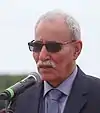 |
Secretary General | Polisario Front |
Sahrawi nationalism, Social democracy | 27 February 1976 | 47 years, 229 days | Non-member state of the United Nations, headquartered in Algeria |
 Vietnam[9] Vietnam[9] |
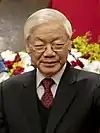 |
General Secretary |  Communist Party of Vietnam Communist Party of Vietnam |
Ho Chi Minh Thought | 2 July 1976 | 47 years, 104 days |
Concept
One-party states justify themselves through various methods. Most often, proponents of a one-party state argue that the existence of separate parties runs counter to national unity. Others argue that the one party is the vanguard of the people, being its most politically aware members, and therefore the party's right to rule cannot be legitimately questioned. The Soviet government argued that the existence of multiple political parties would perpetuate class struggle, so only a single party could lead a classless proletariat; it therefore made the Communist Party of the Soviet Union the only authorised political party.
Conversely, Russian historian Vadim Rogovin attributed the establishment of the one-party system to the conditions which were “imposed on Bolshevism by hostile political forces”. Rogovin highlighted the fact that the Bolsheviks made strenuous efforts to preserve the Soviet parties such as the Socialist-Revolutionaries, Mensheviks, and other left parties within the bounds of Soviet legality and their participation in the Soviets on the condition of abandoning armed struggle against the Bolsheviks.[10]
Some one-party states only outlaw opposition parties, while allowing allied parties to exist as part of a permanent coalition (such as a popular front). However, these allied parties are largely or completely subservient to the ruling party and must accept the ruling party's monopoly of power as a condition of their existence. Examples of this are the National Front in former East Germany and the Democratic Front for the Reunification of Korea in North Korea. Other states outlaw all other parties yet allow non-party members to run for legislative seats as independents, as was the case with Taiwan's Tangwai movement in the 1970s and 1980s, as well as the elections in the former Soviet Union. Still others have only a single legal party, membership of which is a prerequisite for holding public office, such as in Turkmenistan under the rule of Saparmurat Niyazov or Zaire under Mobutu Sese Seko.
Within their own countries, dominant parties ruling over one-party states are often referred to simply as the Party. For example, in reference to the Soviet Union, the Party meant the Communist Party of the Soviet Union; in reference to the pre-1991 Republic of Zambia, it referred to the United National Independence Party.
Most one-party states have been ruled by one of the following:
- A party which supports the ideology of Marxism–Leninism and vanguardism (sometimes described as "communist states", such as the Soviet Union)
- A party which supports a nationalist or fascist ideology (such as the Kingdom of Italy under the National Fascist Party or Germany under the Nazi Party)
- A party that came to power in the wake of independence from colonial rule. One-party systems often arise from decolonization because a single party gains an overwhelmingly dominant role in liberation or in independence struggles.
With such a small winning coalition, leaders in One-Party states lack the incentive to care about the well-being of citizens.[11] Rather, they give out private goods to fellow elites to ensure continued support. One-Party, compared to Dominant-party dictatorships, structure themselves unlike democracies. They also turn into democracies at a lower rate than Dominant-party dictatorships.[12] While One-Party states prohibit opposition parties, some allow for elections at the smallest local level. One-Party states lack any legitimate competition. Therefore, they place elites and sympathetic candidates in key administrative races.[13] For example, The Chinese Communist Party exercises political control by infiltrating village administrations.[14] They view these positions as crucial for gathering information on the population and maintaining a presence in the far reaches of their borders.[15] One-Party states recognize the trade-off between election victory and gathering valuable data.[16] To account for this, the regimes have been observed placing local nobility in easy to win races.[17] One-Party states have also been observed using elections to ensure that only the most popular elites get chosen to office.[18] They also gather data from elections to indicate if a local official is performing poorly in the eyes of the residents.[18] This gives locals the opportunity to monitor local officials and communicate satisfaction with the local government.[18] Throughout the country, members of the one party hold key political positions.[12] In doing so, the party avoids committing outright fraud and rather sustains their power at the local level with strategic appointment of elites.[15] It is also worth noting that it is difficult to gather clear data on these regimes, given their private nature.[13]
One-party states are usually considered to be authoritarian,[19] to the extent that they are occasionally totalitarian. On the other hand, not all authoritarian or totalitarian states operate upon one-party rule. Some, especially amongst absolute monarchies and military dictatorships, have no need for a ruling party, and therefore make all political parties illegal.
De facto one-party states
A de facto one-party system is one that, while not officially linking a single political party to governmental power, utilizes some means of political manipulation to ensure only one party stays in power.[20] Many different countries have been claimed to be de facto one-party states, with differing levels of agreement between scholars, although most agree that the African continent is marked by this political system.[21][22] Below are just a few examples of governments that have been claimed to have single party rule due to political manipulation.
| Country | Party | Date of
establishment |
Information |
|---|---|---|---|
 Angola Angola |
People's Movement for the Liberation of Angola | 11 November 1975 | The MPLA has ruled Angola since its declaration of independence from Portugal, starting as a de jure one-party state, and declaring multipartyism in 1991 |
 Republic of the Congo Republic of the Congo |
Congolese Party of Labour | 31 December 1968 | The People's Republic of the Congo was a one-party state, until the establishment of multipartyism in 1990 and the subsequent loss of the PCT, leading to a civil war in 1997, from which point the PCT has been the sole ruling party since. |
 Equatorial Guinea Equatorial Guinea |
Democratic Party of Equatorial Guinea | 11 October 1987 | Despite not having any constitutional relation between the government and the PDGE, there is a link between the 1982 constitution and Theodoro Obiang, leader of the PDGE, leading Equatorial Guinea since 1979, and having won every election by at least 92% approval, with all "opposition" parties adamantly supporting Obiang, and never holding more than 32% of seats in any house. |
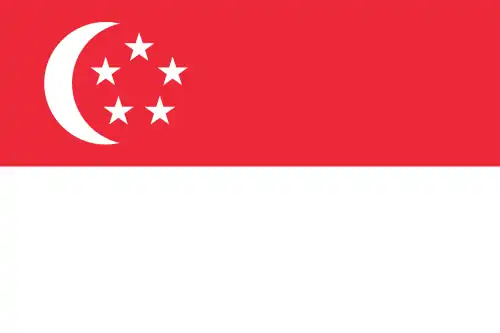 Singapore Singapore |
People's Action Party | 30 May 1959 | The PAP is currently the longest ruling party in the world. While it does not have much electoral controversy, the PAP is essentially linked to governance in Singapore. |
 Japan Japan |
Liberal Democratic Party | 15 November 1955 | After the signing of the Treaty of San Francisco, the estranged right wing parties began gaining power, and with incentives from the CIA,[23] they formed the LDP, counteracting the formation of the JSP, establishing the 1955 System (also known as the One and a Half Party System), in which the LDP has ruled in all but 4 years. |
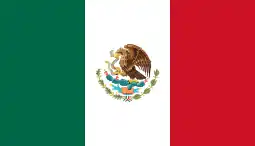 Mexico Mexico |
Institutional Revolutionary Party | 4 March 1929 | While not continually in power, the PRI has allegedly bought votes and actively disrupted opposition parties in order to stay in power. The PRI held uninterrupted power for 71 years, from 1929 to 2000, but its power has since dwindled and the de facto one-party system in Mexico disappeared. |
 Russia Russia |
Unity (1999-2001) and United Russia (2001-) | Between 2000 and 2005 | After the formation of the Russian Federation, the CPRF quickly became the dominant party in the State Duma and Federation Council. The party slowly lost their power through the 1990s with the growing power of smaller conservative powers, developing into Russian parties of power, being directly associated with the concept of governance through Russian oligarchism. United Russia, led by former president Dmitry Medvedev, is not affiliated directly with Vladimir Putin (who serves as an independent), but directly supports him through the All-Russia People's Front, holding a good majority in the State Duma and the Federation Council since 2003. |
 Rwanda Rwanda |
Rwandan Patriotic Front | In power since 1994 | Although Rwanda is nominally democratic, elections are manipulated in various ways, which include banning opposition parties, arresting or assassinating critics, and electoral fraud.[24][25][26][27][28][29][30] |
Former one-party states
| Country | Party | Ideology | Date of establishment | Date of dissolution | Continent |
|---|---|---|---|---|---|
.svg.png.webp) Republic of Afghanistan Republic of Afghanistan |
National Revolutionary Party |
Pashtun nationalism, Pashtunization, Republicanism, Secularism | 14 February 1977[31][32] | 28 April 1978 | Asia |
.svg.png.webp) Democratic Republic of Afghanistan Democratic Republic of Afghanistan |
 People's Democratic Party of Afghanistan-Khalq People's Democratic Party of Afghanistan-Khalq |
Communism, Marxism–Leninism, Stalinism, Pashtun nationalism, Anti-imperialism | April 30, 1978 | 24 December 1979 | Asia |
.svg.png.webp) .svg.png.webp) Democratic Republic of Afghanistan/Republic of Afghanistan Democratic Republic of Afghanistan/Republic of Afghanistan |
People's Democratic Party of Afghanistan-Parcham (National Fatherland Front) |
Communism (until 1990), Marxism–Leninism (until 1990), Afghan nationalism, Anti-imperialism | 24 December 1979 | 28 July 1992 | Asia |
.svg.png.webp) Albanian Kingdom Albanian Kingdom |
Albanian Fascist Party |
Albanian nationalism, Greater Albania, Fascism, Italophilia, Serbophobia, Hellenophobia | 2 June 1939 | 27 July 1943 | Europe |
| Albanian Kingdom |
Guard of Greater Albania | Albanian nationalism, Fascism | 27 July 1943 | 8 September 1943 | Europe |
.svg.png.webp) Albanian Kingdom Albanian Kingdom |
National Front | Albanian nationalism, Greater Albania, Anti-communism, Republicanism, Big tent, Agrarian socialism | 14 September 1943 | 29 November 1943 | Europe |
.svg.png.webp) .svg.png.webp) Democratic Government of Albania Democratic Government of Albania |
 Party of Labour of Albania (National Liberation Movement) Party of Labour of Albania (National Liberation Movement) |
Communism, Marxism–Leninism, Hoxhaism, Anti-revisionism | 20 October 1944 | 5 August 1945 | Europe |
| Democratic Government of Albania |
Party of Labour of Albania (Democratic Front) |
5 August 1945 | 11 January 1946 | Europe | |
| Albania |
11 January 1946 | 11 December 1990 | Europe | ||
 Algeria Algeria |
.svg.png.webp) National Liberation Front National Liberation Front |
Arab socialism, Algerian nationalism, Pan-Arabism, Anti-imperialism | 1962 | 1989 | Africa |
| People's Republic of Angola |
 People's Movement for the Liberation of Angola People's Movement for the Liberation of Angola |
Communism, Left-wing nationalism, Marxism–Leninism | 11 November 1975 | 30 May 1991 | Africa |
.svg.png.webp) Armenia Armenia |
Communist Party of Armenia | Communism, Marxism–Leninism, democratic centralism, state socialism | 2 December 1920 | 30 December 1922 | Asia |
 Transcaucasia Transcaucasia |
Communist Party of Armenia | Communism, Marxism–Leninism, democratic centralism, state socialism | 12 March 1922 | 30 December 1922 | Asia |
 Federal State of Austria Federal State of Austria |
 Fatherland Front Fatherland Front |
Clerical fascism | 1 May 1934 | 13 March 1938 | Europe |
.svg.png.webp) .svg.png.webp) .svg.png.webp) Azerbaijan Azerbaijan |
Azerbaijan Communist Party | Communism, Marxism–Leninism, democratic centralism, state socialism | 30 April 1920 | 30 December 1922 | Asia |
| Transcaucasia |
Azerbaijan Communist Party | Communism, Marxism–Leninism, democratic centralism, state socialism | 12 March 1922 | 30 December 1922 | Asia |
 Bangladesh Bangladesh |
Bangladesh Krishak Sramik Awami League | Mujibism, Bengali nationalism, Socialism | 24 January 1975 | 15 August 1975 | Asia |
 Dahomey Dahomey |
Dahomeyan Democratic Party | African nationalism | 1963 | 1965 | Africa |
.svg.png.webp) Benin Benin |
 People's Revolutionary Party of Benin People's Revolutionary Party of Benin |
Communism, Marxism–Leninism (nominally) | 30 November 1975 | 1 March 1990 | Africa |
 Protectorate of Bohemia and Moravia Protectorate of Bohemia and Moravia |
 National Partnership National Partnership |
Collaborationism, Nazism | 6 April 1939 | 9 May 1945 | Europe |
.svg.png.webp) .svg.png.webp) .svg.png.webp) .svg.png.webp) Bulgaria Bulgaria |
 Bulgarian Communist Party (Fatherland Front) Bulgarian Communist Party (Fatherland Front) |
Communism, Marxism–Leninism, democratic centralism, state socialism | 15 September 1946 | 15 January 1990 | Europe |
 State of Burma State of Burma |
Dobama Sinyetha Asi Ayon[33] | 1943 | 1944 | Asia | |
| State of Burma |
Maha Bama Asi Ayon[34] | 1944 | 1945 | Asia | |
.svg.png.webp) Burma Burma |
.svg.png.webp) Burma Socialist Programme Party Burma Socialist Programme Party |
Burmese Way to Socialism | 1962 | 1988 | Asia |
.svg.png.webp)  Republic of Burundi Republic of Burundi |
 Union for National Progress Union for National Progress |
Burundian nationalism, Tutsi interests | 11 July 1974 | 13 March 1992 | Africa |
.svg.png.webp) Byelorussia Byelorussia |
Communist Party of Byelorussia | Communism, Marxism–Leninism, democratic centralism, state socialism | 31 July 1920 | 30 December 1922 | Europe |
 Cambodia (Sangkum era) Cambodia (Sangkum era) |
Sangkum | Khmer nationalism, National conservatism, Royalism, Statism, Buddhist socialism, Economic nationalism | 1955 | 1970 | Asia |
 .svg.png.webp) Kampuchea Kampuchea |
Kampuchean People's Revolutionary Party | Communism, Socialism, Marxism–Leninism, Revisionism, Left-wing nationalism | 7 January 1979 | 23 October 1991 | Asia |
.svg.png.webp)  Republic of Cameroon Republic of Cameroon |
Cameroonian National Union | Big tent | 1 September 1966[35] | 24 March 1985 | Africa |
| Cameroon |
Cameroon People's Democratic Movement | Big tent, Nationalism, Francophilia | 1975 | 1990 | Africa |
.svg.png.webp) Cape Verde Cape Verde |
 African Party for the Independence of Guinea and Cape Verde African Party for the Independence of Guinea and Cape Verde |
Communism, Marxism–Leninism | 1975 | 1980 | Africa |
| Cape Verde |
 African Party for the Independence of Cape Verde African Party for the Independence of Cape Verde |
Communism, Marxism–Leninism | 1980 | 1990 | Africa |
 Carpatho-Ukraine Carpatho-Ukraine |
Ukrainian National Union[36] | Nationalism[37] | 18 January 1939[38] | March 1939 | Europe |
 Central African Republic Central African Republic |
Movement for the Social Evolution of Black Africa | African nationalism, Anti-colonialism, Progressivism, Anti-imperialism | 1962 | 1980 | Africa |
| Central African Republic |
Central African Democratic Union | African nationalism, Republicanism | 1 March 1980 | 2 September 1981 | Africa |
| Central African Republic |
Central African Democratic Rally | African nationalism, Democratic socialism, Social democracy, Republicanism | 6 February 1987 | 22 April 1991[39] | Africa |
 Chad Chad |
Chadian Progressive Party | African nationalism, Pan-Africanism, Anti-imperialism, African socialism, Federalism | 16 April 1962 | 6 April 1973 | Africa |
| Chad |
National Movement for the Cultural and Social Revolution | African nationalism, Pan-Africanism, Anti-imperialism, African socialism, Federalism | 6 April 1973 | 13 April 1975 | Africa |
| Chad |
National Union for Independence and Revolution | Nationalism | 1984 | 1990 | Africa |
| Guangzhou | Chinese Communist Party | Marxism–Leninism, Mao Zedong Thought, Chinese communism | 1927 | 1927 | Asia |
| Hunan | Chinese Communist Party | Marxism–Leninism, Mao Zedong Thought, Chinese communism | 1927 | 1927 | Asia |
| Jinggang | Chinese Communist Party | Marxism–Leninism, Mao Zedong Thought, Chinese communism | 1927 | 1928 | Asia |
| Southwest Jiangxi | Chinese Communist Party | Marxism–Leninism, Mao Zedong Thought, Chinese communism | 1930 | 1931 | Asia |
 Chinese Soviet Republic Chinese Soviet Republic |
.svg.png.webp) Chinese Communist Party Chinese Communist Party |
Marxism–Leninism, Mao Zedong Thought, Chinese communism | 1930 | 1937 | Asia |
 Xinjiang Xinjiang |
People's Anti-Imperialist Association | Six Great Policies | 1935 | 1942 | Asia |
 Republic of China[note 1]/Taiwan Republic of China[note 1]/Taiwan |
 Kuomintang Kuomintang |
Tridemism | 1 July 1925 | 15 July 1987 | Asia |
| Yan'an | Chinese Communist Party | Marxism–Leninism, Mao Zedong Thought, Chinese communism | 1937 | 1949 | Asia |
.svg.png.webp) Comoros Comoros |
Comorian Union for Progress | Nationalism | 1982 | 1990 | Africa |
 People's Republic of the Congo People's Republic of the Congo |
Congolese Party of Labour | Communism, Marxism–Leninism | 31 January 1969 | 1991 | Africa |
.svg.png.webp) Tinoquista Costa Rica Tinoquista Costa Rica |
Peliquista Party | Nationalism | 1917 | 1919 | North America |
 Czechoslovakia Czechoslovakia |
 Communist Party of Czechoslovakia (National Front) Communist Party of Czechoslovakia (National Front) |
Marxism–Leninism, democratic centralism, state socialism, Husakism | 25 February 1948 | 30 November 1989 | Europe |
| Dahomey |
Dahomeyan Unity Party | African nationalism, Republicanism | 1961 | 1963 | Africa |
 Danzig Danzig |
.svg.png.webp) Nazi Party Nazi Party |
Nazism | 21 October 1937[40][41] | 1 September 1939 | Europe |
 Djibouti Djibouti |
People's Rally for Progress | Issa interests | 1977 | 1992 | Africa |
 Dominican Republic Dominican Republic |
Dominican Party | Trujillism, National conservatism, Right-wing populism | 1931 | 1961 | Central America |
 East Germany East Germany |
 Socialist Unity Party of Germany (Democratic Bloc) Socialist Unity Party of Germany (Democratic Bloc) |
Communism, Marxism–Leninism, democratic centralism, state socialism | 7 October 1949 | 30 March 1950 | Europe |
 East Germany East Germany |
Socialist Unity Party of Germany (National Front of the German Democratic Republic) |
Communism, Marxism–Leninism, democratic centralism, state socialism | 30 March 1950 | 1 December 1989 | Europe |
 Egypt Egypt |
Liberation Rally | Egyptian nationalism, Pan-Arabism, Socialism | 1953 | 1958 | Africa |
.svg.png.webp) Egypt Egypt |
National Union | Nasserism, Pan-Arabism, Socialism | 1958 | 1961 | Africa |
.svg.png.webp) Egypt Egypt |
Arab Socialist Union | Arab nationalism, Arab socialism, Pan-Arabism, Nasserism | 1961 | 1976 | Africa |
| Egypt |
National Democractic Party | Egyptian nationalism, Big-Tent, Neo-liberalism | 1976 | 2011 | Africa |
 El Salvador El Salvador |
 National Pro Patria Party National Pro Patria Party |
Fascism, Anti-communism, Conservatism, Agrarian oligarchy | 1931 | 1944 | Central America |
| Equatorial Guinea |
United National Workers' Party | African nationalism, Personalism, Anti-imperialism, Anti-colonialism, Anti-racism, Pan-Africanism, Anti-intellectualism | 1970 | 1979 | Africa |
| Equatorial Guinea |
Democratic Party of Equatorial Guinea | African nationalism, Militarism | 1987 | 1991 | Africa |
.svg.png.webp) Eritrea Eritrea |
Eritrean People's Liberation Front |
Left-wing nationalism | 1991 (Provisional government)
1993 (Recognized state) |
1994 | Africa |
 Estonia Estonia |
Patriotic League (National Front for the Implementation of the Constitution) | Estonian nationalism, Personalism | 9 March 1935 | 21 July 1940 | Europe |
.svg.png.webp) Estonia Estonia |
Communist Party of Estonia | Communism, Marxism–Leninism, democratic centralism, state socialism | 21 July 1940 | 9 August 1940 | Europe |
.svg.png.webp) Ethiopia Ethiopia |
Commission for Organizing the Party of the Working People of Ethiopia | Communism, Marxism–Leninism | 12 September 1984 | 22 February 1987 | Africa |
.svg.png.webp) Ethiopia Ethiopia |
 Workers' Party of Ethiopia Workers' Party of Ethiopia |
Communism, Marxism–Leninism | 22 February 1987 | 28 April 1991 | Africa |
 Gabon Gabon |
Gabonese Democratic Party | Conservatism | 1968 | 1990 | Africa |
.svg.png.webp) Georgia Georgia |
Communist Party of Georgia | Communism, Marxism–Leninism, democratic centralism, state socialism | 25 February 1921 | 30 December 1922 | Asia |
| Transcaucasia |
Communist Party of Georgia | Communism, Marxism–Leninism, democratic centralism, state socialism | 12 March 1922 | 30 December 1922 | Asia |
.svg.png.webp) Nazi Germany Nazi Germany |
National Socialist German Workers' Party |
Nazism | 14 July 1933 | 23 May 1945 | Europe |
| Reich Commissariat for the Occupied Dutch Territories |
 National Socialist Movement in the Netherlands National Socialist Movement in the Netherlands |
Collaborationism, Dutch irredentism, Dutch nationalism and Nazism | 14 December 1941 | 6 May 1945 | Europe |
.svg.png.webp) Ghana Ghana |
Convention People's Party | Nkrumaism, African socialism, African nationalism, Pan-Africanism | 1964 | 1966 | Africa |
 Grenada Grenada |
New Jewel Movement | Communism, Marxism–Leninism | 13 March 1979 | 25 October 1983 | Central America |
 Guatemala Guatemala |
Progressive Liberal Party | Ubicoism, Liberalism, Nationalism, Anti-communism | 1931 | 1944 | Central America |
 Guinea Guinea |
Democratic Party of Guinea – African Democratic Rally | African nationalism, African socialism, Pan-Africanism | 1958 | 1984 | Africa |
 Guinea-Bissau Guinea-Bissau |
African Party for the Independence of Guinea and Cape Verde | Communism, Marxism–Leninism | 1974 | 1991 | Africa |
.svg.png.webp) Haiti Haiti |
.svg.png.webp) National Unity Party National Unity Party |
Black nationalism, Haitian nationalism, Right-wing populism, Anti-communism, Anti-Americanism | 1957 | 1985 | Central America |
 Hawaii Hawaii |
Reform Party | Americanisation, Annexationism | 1894 | 1898 | North America |
.svg.png.webp) Government of National Unity Government of National Unity |
 Arrow Cross Party Arrow Cross Party |
Hungarism, Fascism, Collaborationism, Agrarianism | 16 October 1944 | 7 May 1945 | Europe |
.svg.png.webp) .svg.png.webp) .svg.png.webp) Hungary Hungary |
 Hungarian Working People's Party Hungarian Working People's Party |
Communism, Marxism–Leninism, Stalinism | 20 August 1949 | 30 October 1956 | Europe |
 Hungary Hungary |
Hungarian Socialist Workers' Party | Communism, Marxism–Leninism, Kádárism | 4 November 1956 | 7 October 1989 | Europe |
 Indonesia Indonesia |
Indonesian National Party | Nationalism, Marhaenism | 17 August 1945 | 3 November 1945 | Asia |
 Imperial State of Iran Imperial State of Iran |
Rastakhiz Party | Monarchism, Populism, Secularism, Democratic centralism, Third Position | 1975 | 1978 | Asia |
 Iran Iran |
Islamic Republican Party | Velyât-e Faqih, Anti-imperialism, Iranian nationalism, Shi'ite Islamism, Anti-Monarchism, Anti-Americanism, Anti-communism, Anti-Sovietism, Anti-Zionism, Islamic fundamentalism, Homophobia, Anti-Western sentiment | 1981 | 1987 | Asia |
.svg.png.webp) .svg.png.webp) Iraq Iraq |
Iraqi Arab Socialist Union | Arab nationalism, Arab socialism, Pan-Arabism, Nasserism | 1964 | 1968 | Asia |
.svg.png.webp) Iraq Iraq |
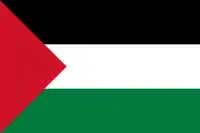 Arab Socialist Ba'ath Party (National Progressive Front) Arab Socialist Ba'ath Party (National Progressive Front) |
Saddamist Ba'athism | 1968 | 2003 | Asia |
.svg.png.webp) Kingdom of Italy Kingdom of Italy
|
.svg.png.webp) National Fascist Party National Fascist Party
|
Fascism, Corporatism, Ultranationalism, Totalitarianism | 17 May 1928[42]
|
27 July 1943 | Europe
|
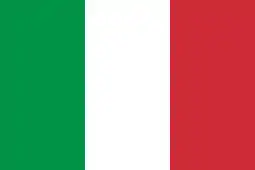 Italian Social Republic Italian Social Republic |
Republican Fascist Party |
Fascism, Corporatism, Ultranationalism, Totalitarianism, Antisemitism, Collaborationism | 13 September 1943 | 28 April 1945 | Europe |
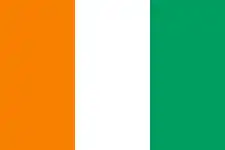 Ivory Coast Ivory Coast |
Democratic Party of Ivory Coast – African Democratic Rally | African nationalism, Conservatism, Populism, Houphouëtism, Pan-Africanism | 1960 | 1990 | Africa |
.svg.png.webp) Empire of Japan Empire of Japan |
Imperial Rule Assistance Association | Shōwa statism | 1940 | 1945 | Asia |
| Philippine Executive Commission |
 Association for Service to the New Philippines Association for Service to the New Philippines |
Filipino nationalism, National conservatism, Fascism, Pro-Japan, collaborationism | 8 December 1942 | 14 October 1943 | Asia |
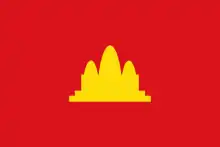 Kampuchea Kampuchea |
 Communist Party of Kampuchea Communist Party of Kampuchea |
Communism, Marxism–Leninism, Agrarianism, Autarky, Khmer nationalism, Ultranationalism | 17 April 1975 | 22 June 1982 | Asia |
 Kenya Kenya |
Kenya African National Union | Kenyan nationalism, Conservatism | 1982 | 1991 | Africa |
.svg.png.webp) Independent State of Croatia Independent State of Croatia |
Ustaša – Croatian Revolutionary Movement | Croatian irredentism, Croatian ultranationalism, National conservatism, Social conservatism, Clerical fascism, Fascist corporatism, Political Catholicism, Anti-communism | 10 April 1941 | 8 May 1945 | Europe |
.svg.png.webp) Latvia Latvia |
Communist Party of Latvia | Communism, Marxism–Leninism, democratic centralism, state socialism | 17 December 1918 | 13 January 1920 | Europe |
.svg.png.webp) Latvia Latvia |
Communist Party of Latvia | Communism, Marxism–Leninism, democratic centralism, state socialism | 21 July 1940 | 5 August 1940 | Europe |
.svg.png.webp) Libya Libya |
Arab Socialist Union | Arab nationalism, Arab socialism, Pan-Arabism, Nasserism, Nationalism | 1971 | 1977 | Africa |
 Lithuania–Byelorussia Lithuania–Byelorussia |
Communist Party of Lithuania and Belorussia | Communism, Marxism–Leninism, democratic centralism, state socialism | 17 February 1919 | 17 July 1919 | Europe |
 Lithuania Lithuania |
 Lithuanian Nationalist Union Lithuanian Nationalist Union |
Lithuanian nationalism, National conservatism, Social conservatism, Fascist corporatism, Right-wing populism, Anti-communism, Antisemitism | 1927 | 1940 | Europe |
.svg.png.webp) Lithuania Lithuania |
Communist Party of Lithuania | Communism, Marxism–Leninism, democratic centralism, state socialism | 21 July 1940 | 3 August 1940 | Europe |
 Democratic Republic of Madagascar Democratic Republic of Madagascar |
National Front for the Defense of the Revolution | Left-wing nationalism, Scientific socialism | 1976 | 1989 | Africa |
 Malawi Malawi |
Malawi Congress Party | Ubuntu, Conservatism, African nationalism, Anti-colonialism | 1964 | 1993 | Africa |
.svg.png.webp)  Mali Mali |
Sudanese Union – African Democratic Rally | African nationalism, Pan-Africanism, African socialism | 1960 | 1968 | Africa |
| Mali |
Democratic Union of the Malian People | African socialism, Democratic centralism | 1976 | 1991 | Africa |
 Manchukuo Manchukuo |
 Concordia Association Concordia Association |
Fascism, Monarchism, Manchurian nationalism, Pan-Asianism, Anti-communism, Personalism, collaborationism | 1 April 1932[43] | 1 May 1945[43] | Asia |
.svg.png.webp) Mauritania Mauritania |
Mauritanian People's Party | Nationalism, Centralism, Islamic socialism | 1961 | 1978 | Africa |
.svg.png.webp) .svg.png.webp) .svg.png.webp) .svg.png.webp) Mongolia Mongolia |
Mongolian People's Revolutionary Party | Communism, Marxism–Leninism | 1921 | 29 July 1990 | Asia |
.svg.png.webp) .svg.png.webp) .svg.png.webp)  Mozambique Mozambique |
.svg.png.webp) FRELIMO FRELIMO |
Marxism–Leninism | 25 June 1975 | 1 December 1990 | Africa |
 Niger Niger |
Nigerien Progressive Party – African Democratic Rally | African nationalism, Pan-Africanism | 1960 | 1974 | Africa |
| Niger |
National Movement for the Development of Society | Conservatism | 1989 | 1991 | Africa |
.svg.png.webp) Vietnam (partially) Vietnam (partially) |
Workers' Party of North Vietnam (League for the Independence of Vietnam) |
Communism, Marxism–Leninism, Ho Chi Minh Thought | 2 September 1945 | 1946 | Asia |
.svg.png.webp) North Vietnam North Vietnam |
Workers' Party of North Vietnam (Vietnamese Fatherland Front) | Communism, Marxism–Leninism, Ho Chi Minh Thought | 1955 | 2 July 1976 | Asia |
 North Yemen North Yemen |
 General People's Congress General People's Congress |
Yemeni nationalism, Arab nationalism, Pan-Arabism, Big tent | 1982 | 1988 | Asia |
 National Government National Government |
 National Rally National Rally |
Fascism, Nazism, Fascist corporatism, Anti-communism, Collaborationism | 25 September 1940 | 8 May 1945 | Europe |
.svg.png.webp) Ottoman Empire Ottoman Empire |
Union and Progress Party[44] | İttihadism | 11 June 1913 | 1918 | Asia/Europe |
 Paraguay Paraguay |
 Colorado Party Colorado Party |
Conservatism, national conservatism | 1947 | 1962 | South America |
 Persia Persia |
Communist Party of Persia | Communism, Marxism–Leninism | 1920 | 1921 | Asia |
.svg.png.webp) Republic of the Philippines Republic of the Philippines |
Association for Service to the New Philippines |
Filipino nationalism, National conservatism, Fascism, Pro-Japan, collaborationism | 14 October 1943 | 17 August 1945 | Asia |
.svg.png.webp) .svg.png.webp) Poland Poland |
 Polish United Workers' Party (Front of National Unity) Polish United Workers' Party (Front of National Unity) |
Marxism–Leninism, democratic centralism, state socialism | 5 February 1947 | July 1982 | Europe |
| Poland |
Polish United Workers' Party (Patriotic Movement for National Rebirth) |
Marxism–Leninism, democratic centralism, state socialism | July 1982 | 24 August 1989 | Europe |
 Portugal Portugal |
 National Union National Union |
Salazarism, corporatism, Integralismo Lusitano | 30 July 1930[45] | 8 October 1945[45] | Europe |
| Portugal |
National Union |
Salazarism, corporatism, Integralismo Lusitano | 31 January 1948[46] | September 1969[note 2] | Europe |
| Portugal |
People's National Action (formerly National Union) |
Corporatism, Integralismo Lusitano | 1970 | 25 April 1974 | Europe |
 Romania Romania |
 Party of the Nation Party of the Nation |
Big tent, Romanian nationalism, Monarchism | 16 December 1938 | 6 September 1940 | Europe |
 National Legionary State National Legionary State |
.svg.png.webp) Iron Guard Iron Guard |
Legionarism, clerical fascism, Christian nationalism | 6 September 1940 | 23 January 1941 | Europe |
.svg.png.webp) .svg.png.webp) .svg.png.webp) Romania Romania |
 Romanian Communist Party (People's Democratic Front) Romanian Communist Party (People's Democratic Front) |
Communism, Marxism–Leninism | 5 February 1948 | 1968 | Europe |
| Romania |
Romanian Communist Party (Front of Socialist Unity) |
Communism, Marxism–Leninism, National Communism | 1968 | 1980 | Europe |
| Romania |
Romanian Communist Party (Front of Socialist Unity and Democracy) |
Communism, Marxism–Leninism, National Communism | 1980 | 29 December 1989 | Europe |
.svg.png.webp) Rwanda Rwanda |
Parmehutu | Hutu Power | 1965 | 1973 | Africa |
| Rwanda |
.svg.png.webp) National Revolutionary Movement for Development National Revolutionary Movement for Development |
Hutu Power, Ultranationalism, Social conservatism, Anti-communism | 1978 | 1991 | Africa |
 San Marino San Marino |
Sammarinese Fascist Party | Italian fascism, Corporatism | 1926 | 1943 | Europe |
| San Marino |
Republican Fascist Party of San Marino | Italian fascism | 1943 | 1944 | Europe |
 Senegal Senegal |
Socialist Party of Senegal | African nationalism, African socialism | 1966 | 1974 | Africa |
.svg.png.webp) Seychelles Seychelles |
Seychelles People's Progressive Front | Communism, Marxism-Leninism | 1977 | 1991 | Africa |
 Sierra Leone Sierra Leone |
All People's Congress | African nationalism, Democratic socialism | 1978 | 1991 | Africa |
.svg.png.webp) Slovak Republic Slovak Republic |
_variant_2.svg.png.webp) Hlinka's Slovak People's Party – Party of Slovak National Unity Hlinka's Slovak People's Party – Party of Slovak National Unity |
Clerical fascism, Slovak nationalism | 14 March 1939 | 8 May 1945 | Europe |
 Somalia Somalia |
Somali Revolutionary Socialist Party | Islamic socialism, Marxism–Leninism, Pan-Somalism
Scientific socialism, Somali nationalism |
July 1976 | 26 January 1991 | Africa |
 South Yemen South Yemen |
 National Liberation Front National Liberation Front |
Arab nationalism, Arab socialism | 30 November 1967 | 31 October 1978 | Asia |
| South Yemen |
 Yemeni Socialist Party Yemeni Socialist Party |
Communism, Marxism–Leninism | 31 October 1978 | 22 May 1990 | Asia |
| Yemen |
Yemeni Socialist Party |
Communism, Marxism–Leninism | 21 May 1994 | 7 July 1994 | Asia |
 Estonia Estonia |
Russian Communist Party (Central Committee of the Estonian Sections) | Communism, Marxism–Leninism, democratic centralism, state socialism | 29 November 1918 | 5 June 1919 | Europe |
.svg.png.webp) .svg.png.webp) Russian Soviet Federative Socialist Republic Russian Soviet Federative Socialist Republic |
Russian Communist Party | Communism, Marxism–Leninism, democratic centralism, state socialism | 8 March 1918[47] | 30 December 1922 | Europe/Asia |
| Russian Soviet Federative Socialist Republic |
Russian Social Democratic Labour Party | Communism, Marxism–Leninism, democratic centralism, state socialism | 19 January 1918 | 8 March 1918[47] | Europe/Asia |
.svg.png.webp) .svg.png.webp) .svg.png.webp)  Union of Soviet Socialist Republics Union of Soviet Socialist Republics |
Russian Communist Party | Communism, Marxism–Leninism, democratic centralism, state socialism | 30 December 1922 | 31 December 1925[47] | Europe/Asia |
 Union of Soviet Socialist Republics Union of Soviet Socialist Republics |
All-Union Communist Party | Communism, Marxism–Leninism, democratic centralism, state socialism, Stalinism | 31 December 1925[47] | 13 October 1952[47] | Europe/Asia |
.svg.png.webp) Union of Soviet Socialist Republics Union of Soviet Socialist Republics |
Communist Party of the Soviet Union | Communism, Marxism–Leninism, democratic centralism, state socialism | 13 October 1952[47] | 9 October 1990[48] | Europe/Asia |
.svg.png.webp) Kingdom of Spain Kingdom of Spain |
Patriotic Union | Spanish nationalism, Political Catholicism, Monarchism, Conservatism | 1924 | 1930 | Europe |
.svg.png.webp) Spanish State Spanish State |
 FET y de las JONS FET y de las JONS |
Francoism, Falangism, Spanish nationalism, traditionalism, National Catholicism, anti-liberalism, corporatism | 19 April 1937 | 6 July 1976[49] | Europe |
 Democratic Republic of the Sudan Democratic Republic of the Sudan |
 Sudanese Socialist Union Sudanese Socialist Union |
Arab nationalism, Arab socialism, Anti-communism | 1971 | 1985 | Africa |
| Sudan |
National Congress Party | Islamism, Arab nationalism, Salafism, Social conservatism | 1989 | 2005 | Africa |
.svg.png.webp) Syrian Republic Syrian Republic |
Arab Liberation Movement | Pan-Arabism, Modernization, Pro-Western | 1953 | 1954 | Asia |
 Syria Syria |
Arab Socialist Ba'ath Party (National Progressive Front) |
Neo-Ba'athism | 1963 | 27 February 2012[50][51] | Asia |
 São Tomé and Príncipe São Tomé and Príncipe |
Movement for the Liberation of São Tomé and Príncipe – Social Democratic Party | Communism, Marxism–Leninism | 1975 | 1990 | Africa |
.svg.png.webp) Tanganyika Tanganyika |
 Tanganyika African National Union Tanganyika African National Union |
African nationalism, African socialism, Ujamaa | 1961 | 1977 | Africa |
 Tanzania Tanzania |
Chama Cha Mapinduzi | Ujamaa, African socialism | 1977 | 1992 | Africa |
 Togo Togo |
Party of Togolese Unity | African nationalism | 1962 | 1963 | Africa |
| Togo |
Rally of the Togolese People | African nationalism, Right-wing populism | 1969 | 1991 | Africa |
.svg.png.webp) Tunisia Tunisia |
Neo Destour | Tunisian nationalism, Bourguibism | 1963 | 1964 | Africa |
| Tunisia |
Socialist Destourian Party | Tunisian nationalism, Secularism, Bourguibism | 1964 | 1981 | Africa |
 Turkey (one-party period) Turkey (one-party period) |
.svg.png.webp) Republican People's Party Republican People's Party |
Kemalism | 1923 | 1945 | Asia/Europe |
 Turkmenistan Turkmenistan |
Democratic Party of Turkmenistan | Turkmen nationalism, Secularism, Social conservatism, Catch-all party | 1992 | 2008 | Asia |
 .svg.png.webp) .svg.png.webp) .svg.png.webp) .svg.png.webp) .svg.png.webp) .svg.png.webp) Tuva Tuva |
Tuvan People's Revolutionary Party |
Communism, Marxism–Leninism, democratic centralism, state socialism | 14 August 1921 | 11 October 1944 | Asia |
 Uganda Uganda |
 Uganda People's Congress Uganda People's Congress |
Social democracy, African nationalism, Pan-Africanism | 1969 | 1971 | Africa |
.svg.png.webp) Ukraine Ukraine |
Communist Party of Ukraine | Communism, Marxism–Leninism, democratic centralism, state socialism | 10 March 1919 | 30 December 1922 | Europe |
| United Arab Republic |
National Union | Arab nationalism, Arab socialism, Pan-Arabism | 1958 | 1961 | Africa |
 Upper Volta Upper Volta |
Voltaic Democratic Union-African Democratic Rally | African nationalism, Pan-Africanism | 1960 | 1966 | Africa |
.svg.png.webp) Yugoslavia Yugoslavia |
Yugoslav Radical Peasants' Democracy | Royalism, Yugoslav nationalism, Agrarianism, Centralism, Anti-liberalism | 1929 | 1931 | Europe |
.svg.png.webp) .svg.png.webp) Yugoslavia Yugoslavia |
 League of Communists of Yugoslavia (Socialist Alliance of Working People of Yugoslavia) League of Communists of Yugoslavia (Socialist Alliance of Working People of Yugoslavia) |
Marxism–Leninism, Titoism, Yugoslavism | 29 November 1945 | 22 January 1990 | Europe |
.svg.png.webp) Zaire Zaire |
Popular Movement of the Revolution | Mobutism, Zairean nationalism, Authenticité | 1970 | 1990 | Africa |
.svg.png.webp) Zambia Zambia |
 United National Independence Party United National Independence Party |
African socialism, African nationalism | 1972 | 1990 | Africa |
 Zanzibar Zanzibar |
 Afro-Shirazi Party Afro-Shirazi Party |
African nationalism, Marxism–Leninism | 1964 | 1977 | Africa |
See also
- Ban on factions in the Communist Party of the Soviet Union
- Political organisation
- Dominant-party system
- Political factionalism
- Outline of democracy
- Multi-party system
- Two-party system
- List of political party songs
Notes
- The Republic of China controlled the mainland from 1912 to 1949 and the island of Taiwan since 1945, in which the ROC currently administers the Free area. This government served China in the United Nations from 1945 to 1971. See Political status of Taiwan and the One-China policy for various viewpoints.
- Following the appointment of Marcelo Caetano as Prime Minister in 1968, the opposition was allowed to run to the 1969 Portuguese legislative election, before being banned.
Further reading
- Angiolillo, Fabio (2023). "Introducing the One-Party Membership Dataset: A dataset on party membership in autocracies". Journal of Peace Research
References
- Clark, William Roberts; Golder, Matt; Golder, Sona Nadenichek (23 March 2012). Principles of Comparative Politics. SAGE. ISBN 9781608716791.
- Holmes, Geoffrey; and Szechi, D. (2014). The Age of Oligarchy: Pre-Industrial Britain 1722–1783. Routledge. p. xi. ISBN 131789426X. ISBN 978-1317894261.
- Bozarslan, Hamit (2019). "Afterword: Talaat's Empire: A Backward Country, but a State Well Ahead of Its Time". End of the Ottomans - The Genocide of 1915 and the Politics of Turkish Nationalism. I. B. Tauris. p. 330. ISBN 978-1-7867-3604-8.
- "China", The World Factbook, Central Intelligence Agency, 26 January 2023, retrieved 5 February 2023
- Roman, Peter (2003). People's Power: Cuba's Experience with Representative Government. Rowman & Littlefield. ISBN 0-7425-2564-3.
- "Eritreans hope for democracy after peace deal with Ethiopia". BBC News. 17 July 2018. Retrieved 5 February 2023.
- "Laos: Freedom in the World 2020 Country Report". Freedom House. Retrieved 5 February 2023.
- "North Korea: Country Profile". Freedom House. Retrieved 5 February 2023.
- "Vietnam: Country Profile". Freedom House. 30 March 2022. Retrieved 5 February 2023.
- Rogovin, Vadim Zakharovich (2021). Was There an Alternative? Trotskyism: a Look Back Through the Years. Mehring Books. pp. 13–14. ISBN 978-1-893638-97-6.
- Hanson, Stephen E. (2009), "The Contribution of Area Studies", The SAGE Handbook of Comparative Politics, 1 Oliver's Yard, 55 City Road, London EC1Y 1SP United Kingdom: SAGE Publications Ltd, pp. 159–174, doi:10.4135/9780857021083.n10, ISBN 9781412919760, S2CID 184118662, retrieved 4 March 2023
{{citation}}: CS1 maint: location (link) - Magaloni, Beatriz; Kricheli, Ruth (1 May 2010). "Political Order and One-Party Rule". Annual Review of Political Science. 13 (1): 123–143. doi:10.1146/annurev.polisci.031908.220529. ISSN 1094-2939.
- Creak, Simon; Barney, Keith (10 August 2018). "Conceptualising Party-State Governance and Rule in Laos". Journal of Contemporary Asia. 48 (5): 693–716. doi:10.1080/00472336.2018.1494849. ISSN 0047-2336. S2CID 158403649.
- Hassan, Mai; Mattingly, Daniel; Nugent, Elizabeth R. (12 May 2022). "Political Control". Annual Review of Political Science. 25 (1): 155–174. doi:10.1146/annurev-polisci-051120-013321. ISSN 1094-2939.
- MALESKY, EDMUND; SCHULER, PAUL (26 October 2011). "The Single-Party Dictator's Dilemma: Information in Elections without Opposition". Legislative Studies Quarterly. 36 (4): 491–530. doi:10.1111/j.1939-9162.2011.00025.x. ISSN 0362-9805.
- Frantz, Erica. Authoritarianism : what everyone needs to know. ISBN 978-0-19-756964-1. OCLC 1202872902.
- Frantz, Erica. Authoritarianism : what everyone needs to know. ISBN 978-0-19-756964-1. OCLC 1202872902.
- Gandhi, Jennifer; Lust-Okar, Ellen (1 June 2009). "Elections Under Authoritarianism". Annual Review of Political Science. 12 (1): 403–422. doi:10.1146/annurev.polisci.11.060106.095434. ISSN 1094-2939.
- "One-Party States | Encyclopedia.com". www.encyclopedia.com. Retrieved 21 February 2023.
- McLean, Iain; McMillan, Alistair (2009). "One-Party State". Oxford Reference. doi:10.1093/acref/9780199207800.001.0001. ISBN 978-0-19-920780-0. Retrieved 27 August 2023.
- Ziemer, Klaus (1995), Kirk-Greene, Anthony; Bach, Daniel (eds.), "The African One-Party State", State and Society in Francophone Africa since Independence, St Antony’s/Macmillan Series, London: Palgrave Macmillan UK, pp. 97–105, doi:10.1007/978-1-349-23826-2_7, ISBN 978-1-349-23826-2, retrieved 27 August 2023
- Mitchinson, Naomi (January 1984). "One party rule in Africa". The Round Table. 73 (289): 38–44. doi:10.1080/00358538408453617. ISSN 0035-8533.
- Kapur, Nick (6 August 2018). Japan at the Crossroads: Conflict and Compromise after Anpo. Harvard University Press. p. 10. ISBN 978-0-674-98848-4.
- Thomson, Susan (2018). Rwanda: From Genocide to Precarious Peace. Yale University Press. p. 185. ISBN 978-0-300-23591-3.
- Ph.D, Joseph Sebarenzi; Twagiramungu, Noel (8 April 2019). "Rwanda's economic growth could be derailed by its autocratic regime". The Conversation. Retrieved 5 September 2023.
- Waldorf, Lars (2005). "Rwanda's failing experiment in restorative justice". Handbook of Restorative Justice. Routledge. p. ?. ISBN 978-0-203-34682-2.
- Beswick, Danielle (2011). "Aiding State Building and Sacrificing Peace Building? The Rwanda–UK relationship 1994–2011". Third World Quarterly. 32 (10): 1911–1930. doi:10.1080/01436597.2011.610593. S2CID 153404360.
- Bowman, Warigia (2015). Four. Imagining a Modern Rwanda: Sociotechnological Imaginaries, Information Technology, and the Postgenocide State. University of Chicago Press. p. 87. doi:10.7208/9780226276663-004 (inactive 27 September 2023). ISBN 978-0-226-27666-3.
{{cite book}}: CS1 maint: DOI inactive as of September 2023 (link) - Reyntjens, Filip (2011). "Behind the Façade of Rwanda's Elections". Georgetown Journal of International Affairs. 12 (2): 64–69. ISSN 1526-0054. JSTOR 43133887.
- Waldorf, Lars (2017). "The Apotheosis of a Warlord: Paul Kagame". In Themnér, Anders (ed.). Warlord Democrats in Africa: Ex-Military Leaders and Electoral Politics (PDF). Bloomsbury Academic / Nordic Africa Institute. ISBN 978-1-78360-248-3.
- Afghanistan: A Country Study. Claitor's Law Books and Publishing. 2001. ISBN 978-1-57980-744-3.
- "Afghanistan 1977". Princeton University. Archived from the original on 6 April 2012.
- British Documents on Foreign Affairs. Reports and Papers from the Foreign Office Confidential Print: Burma, Ceylon, India and Pakistan. Volume 7. October 1947-December 1948. University Publications of America. 2001. p. 45. ISBN 155655768X.
- British Documents on Foreign Affairs. Reports and Papers from the Foreign Office Confidential Print: Burma, Ceylon, India and Pakistan. Volume 7. October 1947-December 1948. University Publications of America. 2001. p. 45. ISBN 155655768X.
- Mokam, David (2012). "The Search for a Cameroonian Model of Democracy or the Search for the Domination of the State Party: 1966-2006". Cadernos de Estudos Africanos (23): 85–108. doi:10.4000/cea.533.
- Vehesh, M. M.; Palinchak, M. M.; Marchuk, V. V.; Kontsur-Karabinovych, N. M. (2020). Carpathian Ukraine in the Central European political crisis on the eve of World War II (1938-1939): collective monograph (PDF). Liha-Pres. pp. 21, 22, 24. ISBN 9789663972121. Archived from the original (PDF) on 24 May 2023.
- Токар, М. (2004). "Становлення партійної монополії Українського Національного Обʼєднання" (PDF). Науковий вісник Ужгородського університету. Серія: Історія (11): 105–112. Archived from the original (PDF) on 24 May 2023.
- Токар, М. (2004). "Становлення партійної монополії Українського Національного Обʼєднання" (PDF). Науковий вісник Ужгородського університету. Серія: Історія (11): 106. Archived from the original (PDF) on 24 May 2023.
- Central African Republic Unions Strike for Democracy 1990-1993
- Schneiderman, Harry (1938). "Danzig". The American Jewish Year Book. 40: 226–228. JSTOR 23602316.
- Hepburn, A. (7 April 2004). Contested Cities in the Modern West. Springer. ISBN 978-0-230-53674-6.
- Delzell, Charles Floyd (18 June 1971). Mediterranean Fascism 1919–1945. Springer. ISBN 978-1-349-00240-5.
- MacKinnon, Stephen R. (2007). China at War: Regions of China, 1937-45. Stanford University Press. ISBN 978-0-8047-5509-2.
- Bozarslan, Hamit (2019). "Afterword: Talaat's Empire: A Backward Country, but a State Well Ahead of Its Time". End of the Ottomans - The Genocide of 1915 and the Politics of Turkish Nationalism. I. B. Tauris. p. 330. ISBN 978-1-7867-3604-8.
- 12th Period - Second Republic of Portugal
- Raby, D. L. (1988). Fascism and Resistance in Portugal: Communists, Liberals and Military Dissidents in the Opposition to Salazar, 1941-1974. Manchester University Press. ISBN 978-0-7190-2514-3.
- Henderson, Jane (4 May 2011). The Constitution of the Russian Federation: A Contextual Analysis. Bloomsbury Publishing. ISBN 978-1-84731-648-6.
- Kumar, Kundan (2003). Ideology And Political System. Discovery Publishing House. ISBN 978-81-7141-638-7.
- Law 21/1976, of 14 June, on the Right of Political Association.
- "Presidential Decree on Syria's New Constitution". Syrian Arab News Agency. 28 February 2012. Retrieved 14 March 2012.
- Chulov, Martin (27 February 2012). "Syrian regime rockets bombard Homs". The Guardian. Guardian News and Media. Retrieved 14 March 2012.