War in Somalia (2006–2009)
The war in Somalia, also called the Ethiopian invasion of Somalia[23] or the Ethiopian intervention in the Somali Civil War,[24] was a conflict largely involving Ethiopian forces and the Somali Transitional Federal Government (TFG), supplemented by troops from Puntland. The initial adversary in this conflict was the Somali Islamist group, the Islamic Court Union (ICU), but the extremist militant group Al-Shabaab soon took center stage as an insurgency intensified in the wake of the ICU's collapse.[23]
| War in Somalia (2006–2009) | |||||||
|---|---|---|---|---|---|---|---|
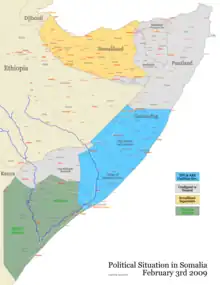 Situation of the war in Somalia February 3, 2009. | |||||||
| |||||||
| Belligerents | |||||||
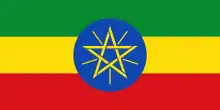
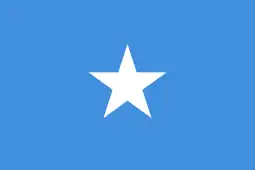
Invasion: Islamic Courts Union Islamic Courts Union Insurgency:
|
 United States[8] United States[8] | ||||||
| Commanders and leaders | |||||||
| |||||||
| Strength | |||||||
| Casualties and losses | |||||||
Ethiopia:
| |||||||
| Civilian casualties: (see § Casualties and displacement) | |||||||



.jpg.webp)

Ethiopian military involvement began in response to the rising power of the ICU, which had seized control of a majority of southern Somalia by late 2006. In order to reinforce the precarious Transitional Federal Government, troops from the Ethiopian National Defence Force (ENDF) initiated deployment into Somalia in June 2006. By December of the same year, the combined TFG/ENDF forces, backed by the US military, were openly at war with the ICU. Concurrently, the ICU's organizational structure collapsed, and TFG/Ethiopian forces claimed the capital city, Mogadishu.[23]
In early 2007, a violent insurgency began, with Al-Shabaab assuming a pivotal role, augmented by clan militias, volunteers, and additional Islamist factions. In response, the African Union (AU) established the AMISOM peacekeeping operation, sending thousands of troops to Somalia to bolster the besieged TFG and ENDF. The Alliance for the Re-liberation of Somalia (ARS), the successor to the ICU, further incited Islamist rebels. Over the subsequent two years, AMISOM, the ENDF, and the TFG found themselves engaged in combat against a swelling insurgency, resulting in nearly one million people being displaced from Mogadishu.[25][26] The TFG's fragility remained unchanged from its state prior to the ICU's dissolution in December 2006. By the end of 2008, the ARS had been assimilated into the TFG's parliament in a bid to halt the insurgency and create a representative government.[23]
At the start of 2009, Ethiopian forces withdrew from Somalia, claiming to have eradicated the "Islamist threat" and declaring victory. However, despite this claim, it was widely observed that by the time of the January 2009 withdrawal, the vast majority of the country, including the capital Mogadishu,[27] had fallen under the control of the more radical and extreme Al-Shabaab.[23]
Forces involved
Forces involved are difficult to calculate because of many factors, including lack of formal organization or record-keeping, and claims marred by disinformation. For months leading up to the war, Ethiopia maintained it had only a few hundred advisors in the country, yet independent reports indicated far more troops.
According to a report by American military correspondent David Axe for Wired magazine, approximately 50,000 Ethiopian National Defence Force (ENDF) troops had been involved in the offensive against the Islamic Courts Union during December 2006.[28] Jeremy Scahill asserted that 40,000 to 50,000 ENDF forces had participated in the invasion.[29] Interior Minister of the TFG, Hussein Farrah Aideed, claimed 12,000 to 15,000 Ethiopian troops had been deployed Somalia.[30] Only 10,000 ENDF troops had crossed the border according to an opinion piece by David Ignatius.[31] The Ethiopian government claimed only 4,000.[30]
The insurgency that would follow the collapse of the ICU would be composed of numerous different groups and factions, making it difficult to determine who was responsible for attacks and abuses, though Al-Shabaab would be the most powerful and active element.[32]
Background
Historic background
Boundary disputes between Somalia and Ethiopia over the Ogaden region date to the 1948 settlement when the land was granted to Ethiopia. Somali disgruntlement with this decision has led to repeated attempts to invade Ethiopia with the hopes of taking control of the Ogaden to create a Greater Somalia. This plan would have reunited the Somali people of the Ethiopian-controlled Ogaden with those living in the Somali Republic. These ethnic and political tensions have caused cross-border clashes over the years:
- 1964 Ethiopian–Somali Border War
- 1977–1978 Ogaden War
- 1982 Border Clash[33][34]
- 1998–2000 Cross-border warfare during the chaotic fraction leader-led era.[35]
Information warfare, disinformation and propaganda
Even before the beginning of the war, there have been significant assertions and accusations of the use of disinformation and propaganda tactics by various parties to shape the causes and course of the conflict. This includes assertions of falsification of the presence or number of forces involved, exaggeration or minimization of the casualties inflicted or taken, influence or control of media outlets (or shutting them down), and other informational means and media to sway popular support and international opinion.
Eastern African countries and international observers had feared the Ethiopian offensive may lead to a regional war, involving Eritrea, which has a complex relationship with Ethiopia and whom Ethiopia claimed to have been a supporter of the ICU.[36] The Eritrean government repeatedly denied any involvement despite Ethiopian claims to the contrary.[37][38][39] Ethiopia would also deny deploying troops in Somalia despite being widely reported.[40] The TFG also denied the involvement of Ethiopian forces.[41]
Prelude to the invasion
On June 17, 2006, Ethiopian troops moved into Somali territory. Local Somali officials and residents in Gedo region reported about 50 Ethiopian armored vehicles had passed through the border town of Dolow and pushed 50km inland near the town of Luuq.[42][43] ICU head Sheik Sharif Sheik Ahmed would claim that 300 Ethiopian troops had entered the country through the border town of Dolow in Gedo region that morning in support of the TFG, and that Ethiopian forces had also been probing Somali border towns. He would go on to threaten to fight Ethiopian troops if they continued intervening and further stated, “We want the whole world to know what’s going on. The United States is encouraging Ethiopia to take over the area. Ethiopia has crossed our borders and are heading for us.”[44][43]
The Ethiopian government would deny the deployment of its forces in Somalia and countered that the ICU was marching towards its borders.[40][45][42] The TFG would deny accusations of an Ethiopian military deployment counter claiming that ICU was fabricating a pretext to assault its capital in Baidoa.[46] Another significant deployment of troops moved into Somalia on July 20, 2006.[47]
On October 9, it was reported Ethiopian troops seized Burhakaba, though another article seemed to indicate that an Ethiopian troop convoy was merely passing through. Islamists claim the town reverted to their control after the Ethiopians departed. SomaliNet reports the elders asked the TFG to leave to avoid bloodshed in their town. The article said it was TFG troops, and not Ethiopians who had come to the town.[48]
On December 8, 2006, the ICU were attacked by TFG forces, backed up by Ethiopian troops. According to the BBC, ICU Chairman Sharif Sheikh Ahmed called on Somalis to "stand up and defeat the enemies".[49] Another official said Ethiopian troops had shelled the town of Bandiradley. The Deputy Defence Minister of the TFG, Salat Ali Jelle, confirmed the fighting but denied any Ethiopian troops were involved. The Ethiopian government denied repeated claims that its troops were fighting alongside TFG militia. Witnesses in Dagaari village near Bandiradley said that they saw hundreds of Ethiopian troops and tanks take up positions near the town with militiamen from the northeastern semi-autonomous region of Puntland.[50]
On December 13, a Reuters report said that the ICU claimed 30,000 Ethiopian troops had already been deployed into Somalia.[11]
Timeline
Invasion (Dec. 2006)
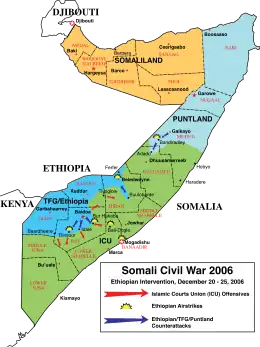
The weak and fragile TFG, which was only capable of controlling small parcels of land far south of Mogadishu, made the unpopular decision to invite Ethiopia to intervene in Somalia.[51]
The Battle of Baidoa began on December 20, 2006, when the TFG's forces allied with occupying Ethiopian forces attacked the ICU. Heavy shooting broke out between TFG troops and Islamists 25 km (16 mi) southeast of Baidoa.[52] The Battle of Bandiradley began on December 23, 2006, when Puntland and Ethiopian forces, along with faction leader Abdi Qeybdid, fought ICU militias defending Bandiradley. The fighting pushed the Islamists out of Bandiradley and over the border south into Adado district, Galgadud region, by December 25.[53]
On December 24, 2006, the Ethiopian government admitted to deploying ENDF forces to fight the ICU for the first time.[54] On December 27, 2006, the top leaders of the Islamic Courts Union, including Sheikh Hassan Dahir Aweys, Sheikh Sharif Sheikh Ahmed and Sheikh Abdirahman Janaqow, resigned on 27 December 2006, and the organisation was disbanded.[55]
On December 29 TFG and Ethiopian troops entered Mogadishu unopposed.
Insurgency (Jan. 2006 to Dec. 2008)
As of January 2007, the Ethiopian government claimed it would withdraw "within a few weeks"[56]
Ethiopian Withdrawal (Jan. 2009)
After the parliament took in 200 officials from the moderate Islamist opposition, ARS leader Sharif Sheikh Ahmed was elected TFG President on January 31, 2009.[57] After this, the Al Shabab radical Islamists accused the new TFG President of accepting the secular transitional government and have continued the civil war since he arrived in Mogadishu at the presidential palace.[58]
In January 2009, Ethiopian troops finally withdrew from Somalia.[23] Al Shabaab rejected any peace deal and continued to take territories, including Baidoa. Another Islamist group, Ahlu Sunna Waljama'a, which is allied to the TFG and supported by Ethiopia, continued to attack Al-Shabaab.[1][59][60]
December 2006
- December 20, 2006: Major fighting broke out around the TFG capital of Baidoa. Thirteen trucks filled with Ethiopian reinforcements were reported en route to the fighting. Leaders of both groups briefly kept an option open for peace talks brokered by the EU.[61] Following the carnage Sheik Hassan Dahir Aweys is reported to have observed that, "Somalia is in a state of war".[62]
- December 22, 2006: Nearly 20 Ethiopian tanks headed toward the front line. According to government sources Ethiopia had 20 T-55 tanks and four attack helicopters in Baidoa.[63]
- December 23, 2006: Ethiopian tanks and further reinforcements arrived in Daynuunay, 30 kilometres east of Baidoa. Heavy fighting continued in Lidale and Dinsoor.[64]
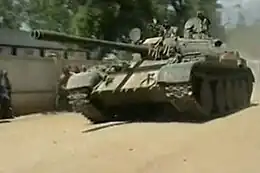
- December 24, 2006: Ethiopia admitted its troops were fighting the Islamists, after stating earlier in the week it had only sent several hundred military advisors to Baidoa. Heavy fighting erupted in border areas, with reports of airstrikes and shelling, including targets near the town of Beledweyne. According to Ethiopian Information Minister Berhan Hailu: "The Ethiopian government has taken self-defensive measures and started counter-attacking the aggressive extremist forces of the |Islamic Courts and foreign terrorist groups."[54]
- December 25, 2006: Ethiopian and TFG forces captured Beledweyne. Defending Islamist forces fled Beledweyne concurrent to Ethiopian airstrikes against the Mogadishu and Bali-Dogle airports. Heavy fighting was also reported in Burhakaba.[65]
- On 26 December 2006, the United Nations envoy to Somalia urged an end to the fighting, and the President of the United Nations Security Council, proposed a draft statement calling for an immediate cease-fire and the withdrawal of all international forces, specifying Ethiopian troops. US, Britain, France, and Russia, objected to the statement, saying peace talks and agreement were necessary before troops could withdraw.[66]
- December 27, 2006: The leaders of the Islamic Courts Union, including Sheikh Hassan Dahir Aweys, Sheikh Sharif Sheikh Ahmed and Sheikh Abdirahman Janaqow resigned, and the organisation was disbanded.[55] The ICU had evacuated many towns without putting up a fight. The ICU top two commanders, defense chief Yusuf Mohammed Siad Inda'ade and his deputy Abu Mansur were away on the Hajj pilgrimage in Mecca. Ethiopian and TFG forces were en route to Somalia's capital, Mogadishu having captured the strategic town of Jowhar, 90 km north from the capital.[67]
- After the Fall of Mogadishu to the Ethiopian and TFG forces on December 28, the Islamists retreated from the Juba River valley.[68]
- Heavy artillery fire was reported on December 31 in the Battle of Jilib and the Islamists fled by midnight, leaving Kismayo, without a fight and retreating towards the Kenyan border.
- On December 31, 2006, A heavily armed column of government and Ethiopian troops advanced from Mogadishu through Lower Shabelle towards Kismayo. They reached Bulo Marer (Kurtun Warrey district) and were heading to Baravo.
2007
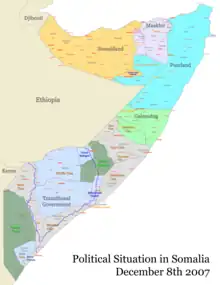
Military events in January 2007 focused on the southern section of Somalia, primarily the withdrawal of the Islamists from Kismayo, and their pursuit using Ethiopian airstrikes in Afmadow district concurrent to the Battle of Ras Kamboni. During this battle, the United States launched an airstrike conducted by an AC-130 gunship which they claimed was against suspected Al-Qaeda operatives. A second airstrike was made after the battle later in January 2007.[69]
By the end of March, the fighting intensified in Mogadishu and more than a thousand people, mostly civilians, were killed. Combat deaths numbered 9 Ethiopian soldiers, 6 Somali soldiers, and an unknown number of insurgents. Hawiye clan militiamen allied with the Islamists clashed with TFG and Ethiopian troops.
In December 2007, Ethiopian troops withdrew from the town of Guriel, and the Islamists controlled Guriel after that. Ethiopia had a large military base there to secure the road linking the two countries.[70]
By the end of December 2007, there were over 700,000 internally displaced people and 6,000 civilians had been killed in Mogadishu. The United Nations said it was the worst ever humanitarian crises in Africa. The TFG claimed that the ICU was regrouping, but the Ethiopian Government refuted this claim.[71]
2008
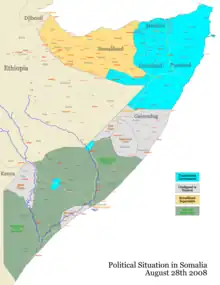
In February 2008, Al Shabaab captured the town of Dinsoor after probing it several times. This marked a change in their strategy which previously focused mainly on the capital Mogadishu.[72][73][74] In late May after capturing the two towns near Kismayo.[75] The Insurgents agreed not to attack Kismayo a city ruled by clan militia.[76] A new Islamic court was opened in Jowhar, 90 km away from the capital Mogadishu.[77]
On March 3, 2008, the United States launched an air strike on the Somali town of Dhoble. U.S. officials claimed the town was held by Islamic extremists, but gave few details to the press.[78] It was reported that Hassan Turki was in the area. The same area was targeted by US bombers one year earlier.[79] An air strike occurred on May 1 in Dhusamareb. It killed the leader of Al-Shabaab Aden Hashi Eyrow along with another senior commander and several civilians; however, the attack did nothing to slow down the Insurgency.[80]
After long talks in Djibouti over a ceasefire between the TFG and the moderate Islamists of the Alliance for the Reliberation of Somalia, agreement was reached that the parliament would be doubled in size to include 200 representatives of the opposition alliance and 75 representatives of the civil society.[81] A new president and prime minister would be elected by the new parliament, and a commission to look into crimes of war would be established.[82] A new constitution was also agreed to be drafted shortly.[83]
In early December 2008, Ethiopia announced it would withdraw its troops from Somalia shortly, and later announced that it would first help secure the withdrawal of the AMISOM peacekeepers from Burundi and Uganda before withdrawing. The quick withdrawal of the AMISOM peacekeepers was seen as putting additional pressure on the United Nations to provide peacekeeping.[84]
2009
Somali troops on December 31, 2008, were seen by civilians packing up supplies and forwarding troop deployments except in the city of Mogadishu. December 31, 2008 was supposed to be when the Ethiopian troops were to withdraw from Somalia but it appears it will be several weeks after the resignation of President Yusuf earlier in December. With a power vacuum growing, it is unknown who will capitalize on the situation.[85]
On January 25, 2009, Ethiopian troops completely pulled out of Somalia.[86]
Al-Shabaab captured Baidoa, where the TFG parliament was based, on January 26. Following the collapse of the TFG, pro-TFG moderate Islamist group Ahlu Sunnah continued to fight Al-Shabaab and captured a few towns.
The former chairman of the Islamic Courts Union, moderate Islamist leader Sheikh Sharif Sheikh Ahmed was elected to become the new President of a united Somali government signalling the end of the Transitional Federal Government marked by the resignation of Abdullahi Yusuf Ahmed the previous month and a joint unity government of the ARS-TFG.
President Sharif, 42, promised to "forge peace with east African neighbors, tackle rampant piracy offshore and rein in hardline insurgents".[85][87] "Analysts said Sharif had a real possibility of reuniting Somalis, given his Islamist roots, the backing of parliament and a feeling in once hostile Western nations that he should now be given a chance to try to stabilize the Horn of Africa nation".[87]
Sharif arrived in Mogadishu as a president for the first time on February 7, 2009. Al-Shabaab and other radical Islamists began firing at the new TFG president hours later. They accused the new President of accepting the secular transitional government.

Mediation had begun between the Islamic Party and the new Transitional Government of Sharif as well as a growing divide being reported in the Al Shabaab organization that controls much of southern Somalia as a large number of Al Shabaab leaders who had held positions in government during the six-month reign of the Islamic Courts Union in 2006 had met behind closed doors with the President of the Transitional Government and the TFG had announced that Sharia law would be implemented in Somalia, but it had not acted on it.[88][89] Sharif's forces and African Union troops clashed with the Islamic Party and Al Shabaab forces, leading to at least 23 death.[90] Pro-TFG militias were allegedly being trained by Ethiopia, while the newly formed Islamist Party had been established by Eritrea-based Sheikh Aweys.
By the time of the Ethiopian withdrawal, the TFG possessed control over only a few streets and buildings in Mogadishu with the rest of the city coming under control of Islamist factions, particularly Al-Shabaab.[91][27]
Consequences
War crimes
The force of about 3,000 Ethiopian troops faced war crimes allegations by human rights groups.[92] The Transitional Federal Government who invited them were also accused of human rights abuses and war crimes including murder, rape, assault, and looting by human rights groups[93]
In their December 2008 report 'So much to Fear' Human Rights Watch warned that since the Ethiopians had intervened in 2006 Somalia was facing a humanitarian catastrophe on a scale not witnessed since the early 1990s. They went on to accuse the TFG of terrorising the citizens of Mogadishu and the Ethiopian soldiers for increasing violent criminality.[93]
On April 19, 2008, Ethiopian soldiers reportedly massacred 21 Islamic students during the Al-Hidaya Mosque massacre.[94]
"Endless war"
A 2010 report published in Accord Issue 21 entitled Endless War states that:[95]
The three years from 2006 to 2008 were catastrophic for Somalis. Military occupation, a violent insurgency, rising jihadism, and massive population displacement has reversed the incremental political and economic progress achieved by the late 1990s in south-central Somalia. With 1.3 million people displaced by fighting since 2006, 3.6 million people in need of emergency food aid, and 60,000 Somalis a year fleeing the country, the people of south-central Somalia face the worst humanitarian crisis since the early 1990s.
Casualties and displacement
In December 2008, the Elman Peace and Human Rights Organisation said it had verified that 16,210 civilians had been killed and 29,000 wounded since the start of the war in December 2006.[20] In September of that year 1.9 million displaced civilians from homes in Mogadishu alone during the year 2007 had been documented.[22][96]
Amisom
On 20 February 2007, the United Nations Security Council authorised the African Union to deploy a peacekeeping mission. The aim of the peacekeeping mission was to support a national reconciliation congress in Somalia.[97] The military component consists of troops drawn from Uganda, Burundi, Djibouti, Kenya and Ethiopia who are deployed in six sectors covering south and central Somalia.[98]
Suicide attacks
Islamist fighters in Somalia opened a completely new aspect in the Somali Civil War: suicide attacks. Here is a list of reported attacks:
- On June 3, 2007, a truck bomb exploded outside the home of the Somali interim prime minister, Ali Mohamed Ghedi. At least six people were killed and 10 injured – most of them bodyguards.[99]
- On February 22, 2009, al-Shabaab carried out a suicide car bomb attack against an African Union military base in Mogadishu, killing at least 11 Burundian peacekeepers.[100]
- On December 3, 2009, an Al-Shabaab militant dressed as a woman entered a medical school graduation ceremony and blew himself up killing 23 people including three ministers of the Transitional Federal Government.[101][102]
Coalition government
Prime Minister Nur Hassan of the transitional government and Sheikh Sharif Sheikh Ahmed of opposition group Alliance for the Re-liberation of Somalia signed a power sharing deal in Djibouti that was brokered by the United Nations. According to the deal, Ethiopian troops withdrew from Somalia, giving their bases to the transitional government, African Union peacekeepers and moderate Islamist groups led by ARS. Following the Ethiopian withdrawal, the transitional government expanded its parliament to include the opposition and elected Sharif as its new president on January 31, 2009.
Continued occupation
Despite the Djibouti Agreement there has been a continued occupation of Somalia by the Ethiopian army.
Sharif Sheikh Ahmed continues to campaign for the withdrawal of the occupying Ethiopian forces. In May 2020 the Forum for National Parties which he leads, described the presence of non-AMISOM Ethiopian troops in Somalia as;
A blatant disregard for the longstanding agreement between the Federal Republic of Somalia and the AMISOM troop-contributing countries (TCC), which clearly defines the scope of the African Union peacekeeping mission in our country.
The letter went on to accuse the ENDF of a 'cavalier attitude' in there response to having shot down a civilian plane in Berdale which was carrying medical supplies for assistance in the COVID-19 pandemic. The Forum for National Parties warned that the Ethiopian government's intention was to;
intervene in the upcoming federal parliamentary and presidential elections, and to intimidate opposition groups all across the country
They blamed the Special Representative of the Chairperson of the African Union Commission for Somalia, Ambassador Francisco Madeira, for not only failing to secure the withdrawal of the non-AMISOM Ethiopian troops but having worked in collusion with them to interfere in the South West election in 2018 and Jubaland election in August 2019.[103]
On 13 November 2020 Bloomberg reported that Ethiopia withdrew thousands of troops from Somalia and redeployed them to assist the Ethiopian government in the Tigray conflict.[104]
Ahlu Sunna
In February 2011 Ahlu Sunna Waljama'a militias attacked Al Shabaab in central Somalia including killing an Islamist commander. Ahlu Sunna clan militias, reportedly armed by Ethiopia, retook control of Galgaduud's provincial capital Dhusamareb and the trading town of Guriel in fierce battles that killed upwards of 100 people.[105]
Key men
Transitional Federal Government (TFG)
An August 24, 2006 article in the Sudan Tribune[106] identified several fraction groups involved with TFG military units:
- Abdullahi Yusuf Ahmed – TFG president, former leader of the SSDF.
- Mohamed Omar Habeeb (Mohamed Dheere) – controlled the Jowhar region with the help of Ethiopia; after losing in Mogadishu as part of the ARPCT, regrouped his militia in Ethiopia and since returned (see Battle of Jowhar).
- Muuse Suudi Yalahow – Controlled Medina District in Mogadishu but was forced to flee by the ICU. Has since returned to the city.
- Hussein Mohamed Farrah – son of late General Mohamed Farrah Aidid. Although his father was a key anti-U.N. force in the mid-1990s, Farrah is a naturalized U.S. citizen and former U.S. Marine who controlled Villa Somalia. Former leader of the SRRC militia. The Sudan Tribune says Farrah is in the patronage of Ethiopia, and Western interests see him as their best hope to improve Somali-Western relations.
- Abdi Hasan Awale Qeybdiid – former finance minister under Gen. Aidid; arrested in Sweden for war crimes, but later released due to lack of evidence.
- Colonel Hasan Muhammad Nur Shatigadud – affiliated with the Rahanweyn Resistance Army (RRA). Came to power after his militia (with the help of Ethiopian paramilitary forces) drove out Aidid's militia from Baidoa, which became the seat of the transitional government. Currently TFG Minister of Finance.
- Mohamed Qanyare Afrah – former Security Minister and member of ARPCT
- Barre Aadan Shire "Hiiraale" – leader of the Juba Valley Alliance (JVA); controls Kismayo (and until its loss to the ICU, Marka region).
- Hassan Abdullah Qalaad
Islamic Court Union (ICU)
- Sharif Sheikh Ahmed, ICU chairman and head of the ICU executive committee
- Hassan Dahir Aweys, head of the ICU shura council, former Somali colonel, listed by the U.S. as a terrorist for heading Osama bin Laden-supported Al-Itihaad al-Islamiya in the 1990s.
Islamist leaders
- Hassan Abdullah Hersi al-Turki, led forces which captured Juba Valley, on U.S. terrorist list for taking over the leadership of Aweys' group
- Abu Taha al-Sudan, former Al-Itihaad al-Islamiya, wanted by the U.S. as the financier of the 1998 United States embassy bombings and involvement in the 2002 Mombasa hotel bombing
- Saleh Ali Saleh Nabhan, listed as a terrorist by the U.S. for reported involvement in the 2002 Mombasa hotel bombing, said to have been a target of the U.S. AC-130 raid in January 2007
- Fazul Abdullah Mohammed, listed as a terrorist by the U.S. for reported involvement in the 1998 U.S. embassy bombings. Some sources claim that he was a target of the U.S. AC-130 raid. His death by the AC-130 raid was later reported by Somali authorities, but denied by US officials.
- Aden Hashi Farah "Eyrow", targeted by the U.S. AC-130 raid that killed eight people on January 8, 2007. Was named Al-Qaeda's leader in Somalia in March 2007. He was killed in a U.S. airstrike on May 1, 2008.
See also
- List of wars: 2003–present
- 2006 timeline of the War in Somalia
- 2007 timeline of the War in Somalia
- 2008 timeline of the War in Somalia
- 2009 timeline of the War in Somalia
- Somali Civil War (2009–present)
References
- "Moderate Islamists seize town from Somali insurgents". Monstersandcritics.com. January 29, 2009. Archived from the original on July 31, 2010. Retrieved July 9, 2011.
- "Somalia signs deal with militia – Africa". Al Jazeera English. March 16, 2010. Archived from the original on March 22, 2010. Retrieved July 9, 2011.
- "Burundi joins Somalia peace force". BBC. February 1, 2007. Archived from the original on February 10, 2007. Retrieved February 9, 2007.
- "Burundi troops ready to join Somalia peacekeepers". Reuters. March 27, 2007. Archived from the original on April 1, 2007. Retrieved April 2, 2007.
- "Malawi to send peacekeepers to Somalia". IRIN. January 22, 2007. Retrieved February 9, 2007.
- "Nigeria to send peacekeeping battalion to Somalia". Reuters. January 24, 2007. Archived from the original on February 16, 2007. Retrieved February 9, 2007.
- "Ugandan Troops Set to Arrive in Somalia as Part of AU Force". Shabelle Media Network. February 16, 2007. Archived from the original on September 27, 2007. Retrieved February 16, 2007.
- Ignatius, David (May 13, 2007). "Ethiopia's Iraq". The Washington Post. Archived from the original on October 14, 2017. Retrieved May 27, 2010.
- "Fighting erupts in northern Somalia as peace talks falter, says Islamic official". International Herald Tribune, Associated Press. November 6, 2006. Archived from the original on December 10, 2006. Retrieved January 5, 2007.
- "Somali prime minister says government is surrounded". Associated Press. November 6, 2006. Archived from the original on February 26, 2008. Retrieved January 5, 2007.
- Yare, Hassan (December 13, 2006). "Troops dig in as Somalia war fears grow". Relief Web, Reuters. Archived from the original on September 27, 2007. Retrieved January 5, 2007.
- Mohamed, Guled (December 25, 2006). "Ethiopian jets strike Somali airports". Reuters. Archived from the original on January 17, 2008. Retrieved January 5, 2007.
- "Somalia 'needs peace force soon'". BBC News. January 5, 2007. Archived from the original on January 7, 2007. Retrieved May 27, 2010.
- Axe, David. "WikiLeaked Cable Confirms U.S.' Secret Somalia Op". Wired. ISSN 1059-1028. Retrieved June 21, 2023.
- "Ethiopian army accomplished 75% of mission in Somalia – Zenawi". SudanTribune article. December 3, 2006. Archived from the original on January 2, 2007. Retrieved July 9, 2011.
- Ignatius, David (May 13, 2007). "Ethiopia's Iraq". Washington Post. Archived from the original on October 14, 2017. Retrieved May 16, 2007.
- "Ethiopian army accomplished 75% of mission in Somalia – Zenawi". Sudan Tribune. December 29, 2006. Archived from the original on January 2, 2007. Retrieved January 5, 2007.
- "Ethiopian PM says Somalia's Islamists have suffered thousands of casualties". International Herald Tribune, Associated Press. December 26, 2006. Archived from the original on February 26, 2008. Retrieved January 5, 2007.
- "'Thousands' desert Somalia forces". BBC News. December 12, 2008. Archived from the original on December 13, 2008. Retrieved May 27, 2010.
- "Sharif back in Mogadishu as death toll hits 16,210". Reuters. December 11, 2008.
- "Home". Garowe Online. March 10, 2009. Archived from the original on March 12, 2009. Retrieved July 9, 2011.
- "ReliefWeb ť Document ť Nearly 9,500 Somalis die in insurgency-group". Reliefweb.int. September 16, 2008. Archived from the original on October 21, 2008. Retrieved July 9, 2011.
- Rice, Xan (January 26, 2009). "Ethiopia ends Somalia occupation". The Guardian.
Ethiopian troops invaded Somalia in December 2006 to crush the Islamic Courts Union (ICU)
- "Ethiopia intervenes in Somali civil war". The Christian Science Monitor. December 26, 2006.
- IBRAHIM, MOHAMED; GETTLEMAN, JEFFREY (January 13, 2009). "Ethiopians Withdraw From Key Bases". The New York Times. ISSN 0362-4331. Retrieved June 24, 2023.
- "Ethiopian troops quit bases in Mogadishu". Reuters. January 13, 2009. Retrieved June 24, 2023.
- "Ethiopia pulls its troops from Somalia - CNN.com". www.cnn.com. Retrieved June 24, 2023.
- Axe, David. "WikiLeaked Cable Confirms U.S.' Secret Somalia Op". Wired. ISSN 1059-1028. Retrieved June 21, 2023.
- Scahill, Jeremy (April 23, 2013). Dirty Wars: The World Is a Battlefield. PublicAffairs. p. 208. ISBN 978-1-56858-727-1.
- "Remnants of Somalia Islamists still pose a threat – official". Associated Press. January 4, 2007. Archived from the original on February 3, 2007. Retrieved January 4, 2007.
- Ignatius, David (May 13, 2007). "Ethiopia's Iraq". washingtonpost.com.
- Albin-Lackey, Christopher (December 8, 2008). ""So Much to Fear"". Human Rights Watch.
- Chick, Court; Albert Grandolini (September 2, 2003). "Somalia, 1980–1996". Central, eastern, and southern Africa database. onwar.com. Archived from the original on March 7, 2007. Retrieved January 5, 2007.
- "Ethiopian-Somalian Border Clash 1982". Wars of the World. onwar.com. December 16, 2000. Archived from the original on September 30, 2007. Retrieved January 5, 2007.
- "Somalia: Ethiopia Denies Troop Incursion Allegations". University of Pennsylvania – African Studies Center. April 12, 1999. Archived from the original on September 22, 2006. Retrieved January 15, 2007.
- "Somalia Conflict Risk Alert" (Press release). International Crisis Group. November 27, 2006. Archived from the original on January 9, 2007. Retrieved January 5, 2007.
- President Isaias reiterates that Eritrea did not send troops to Somalia Archived 2007-02-24 at the Wayback Machine Eritrean Ministry of Information
- "Eritrea denies Somali involvement". BBC. May 16, 2009.
- "Eritrea denies involvement in Somali". Open Democracy. March 18, 2010.
- "Ethiopia denies crossing into Somalia". www.aljazeera.com. Retrieved November 12, 2022.
- Gettleman, Jeffrey (July 22, 2006). "Somali Says Ethiopian Presence Is Just the Uniforms". The New York Times. ISSN 0362-4331. Retrieved June 21, 2023.
- "Ethiopian troops cross border into Somalia". Times of Malta. June 18, 2006. Retrieved November 13, 2022.
- "Border war feared as Somali Islamists vow holy war against Ethiopia - Somalia | ReliefWeb". reliefweb.int. June 18, 2006. Retrieved November 13, 2022.
- "Ethiopian troops enter Somalia – Islamic leader". Sudan Tribune.
- "Ethiopia troops crossing into Somalia-top Islamist". One India. June 17, 2006.
- "Somalia gov't says Islamists plan to attack base - Somalia | ReliefWeb". reliefweb.int. June 18, 2006. Retrieved November 13, 2022.
- "Ethiopian Troops Enter Somalia to Resist Islamic Militia". PBS. July 20, 2006. Archived from the original on January 19, 2014. Retrieved January 5, 2007.
- "Somalis vow holy war on Ethiopia". EthioBlog. Nazret.com. October 9, 2006. Archived from the original on November 30, 2006.
- "'Heavy fighting' in Somali town". BBC. December 8, 2006. Archived from the original on January 1, 2007. Retrieved January 6, 2007.
- "Fresh fighting erupts in Somalia". Al Jazeera. December 8, 2006. Archived from the original on January 6, 2007. Retrieved January 6, 2007.
- "President Yusuf made the failed and unpopular decision to call in troops from neighbouring Ethiopia". BBC News. December 30, 2008. Archived from the original on December 31, 2008. Retrieved July 9, 2011.
- Fighting erupts on Somali front near govt stronghold Reuters Archived October 13, 2008, at the Wayback Machine
- "Somalia: Islamist fighters and Ethiopian backed militias clash in Bandiradley". www.shabelle.net. Archived from the original on September 27, 2007. Retrieved January 12, 2022.
- "Ethiopia admits Somalia offensive". BBC. December 24, 2006. Archived from the original on January 16, 2007. Retrieved January 17, 2007.
- "Islamic Courts Union". Standford University.
- Rice, Xan (January 3, 2007). "Ethiopian troops to leave Somalia 'within weeks'". The Guardian. London. Archived from the original on January 16, 2017. Retrieved May 27, 2010.
- "Moderate Islamist picked as Somali president". Edition.cnn.com. January 31, 2009. Archived from the original on February 2, 2009. Retrieved July 9, 2011.
- Sheikh, Abdi (February 7, 2009). "Rebels target new president". In.reuters.com. Archived from the original on April 14, 2009. Retrieved July 9, 2011.
- "Moderate Islamic group claims victory over rival hardline group". Mareeg.com. Archived from the original on September 3, 2012. Retrieved July 9, 2011.
- "Ahlu Suna Wal Jamea supported by Ethiopian government". Ethioforum.org. Archived from the original on February 13, 2009. Retrieved July 9, 2011.
- Somali Islamist downplays war fears amid clashes Archived January 17, 2008, at the Wayback Machine Reuters
- Apunyu, Bonny (December 22, 2006). "Carnage as Somalia 'in state of war'". CNN. Archived from the original on January 6, 2007. Retrieved January 5, 2007.
- "Ethiopian tanks roll in Somali battle's fourth day". Alertnet.org. Archived from the original on January 11, 2007. Retrieved July 9, 2011.
- Ethiopian tanks move into battle with Somalia Islamists AFP
- Ethiopia attacks Somalia airports Archived January 11, 2007, at the Wayback Machine BBC News
- "U.N. Envoy seeks Security Council action on Somalia". CNN. December 27, 2006. Archived from the original on January 4, 2007. Retrieved January 1, 2007.
- Ethiopians nearing Somali capital Archived January 17, 2007, at the Wayback Machine BBC News
- Farah, Mohamed Abdi (January 1, 2007). "Somalia: Islamists lost their last strongholds". SomaliNet. Archived from the original on January 17, 2007. Retrieved 2007-01-01.
- "Military Official Reports Second US Air Strike in Somalia". Voice of America. January 24, 2007. Archived from the original on February 15, 2007. Retrieved February 6, 2007.
- "Ethiopia leaves key Somali town". BBC. December 28, 2007. Archived from the original on December 31, 2007. Retrieved December 28, 2007.
- "Al Jazeera English - News - Somalia Says Rebels Regrouping". Archived from the original on March 10, 2008. Retrieved February 18, 2016.
- "Latest News". SomaliNet. Archived from the original on July 19, 2011. Retrieved July 9, 2011.
- al-Shabaab reenter Dinsor, threaten to attack Baidoa Archived March 5, 2008, at the Wayback Machine on Garoweonline accessed at March 19, 2008
- "Somali town overrun by Islamists". BBC News. February 25, 2008. Archived from the original on February 29, 2008. Retrieved May 27, 2010.
- "allAfrica.com: Somalia: Somali Rebels Seize Two More Towns (Page 1 of 1)". Archived from the original on May 20, 2008. Retrieved June 11, 2008.
- "allAfrica.com: Somalia: Islamist Rebels in Secret Deal With Kismayo Port Militia (Page 1 of 1)". Archived from the original on May 26, 2008. Retrieved June 11, 2008.
- "allAfrica.com: Somalia: Islamic Court Opened Near Mogadishu (Page 1 of 1)". Archived from the original on October 4, 2012. Retrieved June 11, 2008.
- US Launches Airstrike in Somalia Associated Press, March 3, 2008 Archived March 9, 2008, at the Wayback Machine
- US bombs Islamist town in Somalia Archived March 5, 2008, at the Wayback Machine, BBC, March 3, 2008
- "Air raid kills Somali militants". BBC News. May 1, 2008. Archived from the original on May 4, 2008. Retrieved May 27, 2010.
- "Somali parliament to be doubled". BBC News. November 26, 2008. Archived from the original on December 8, 2008. Retrieved May 27, 2010.
- "Somali gov't, opposition sign power-sharing deal – People's Daily Online". English.people.com.cn. November 26, 2008. Archived from the original on November 2, 2009. Retrieved July 9, 2011.
- "DAILY NATION – Somali MPs accept terms". Nation.co.ke. Archived from the original on July 23, 2011. Retrieved July 9, 2011.
- "Ethiopia to pullout Somalia after guarantying safe departure of AU troops – PM". SudanTribune article. December 24, 2008. Archived from the original on October 4, 2013. Retrieved July 9, 2011.
- "Home". Garowe Online. December 31, 2008. Archived from the original on January 2, 2009. Retrieved July 9, 2011.
- "Islamist leader wins Somali presidency - Yahoo! Canada News". Archived from the original on February 3, 2009. Retrieved February 18, 2016.
- "allAfrica.com: Somalia: Hawiye Elders Say Mediation Efforts Going Well (Page 1 of 1)". Archived from the original on October 7, 2012. Retrieved February 10, 2009.
- Derek Kilner (February 10, 2009). "Somalia's New President Continues Push for Insurgent Support". Voanews.com. Archived from the original on March 18, 2009. Retrieved July 9, 2011.
- "Violent clashes in Mogadishu kill 23". February 24, 2009. Retrieved July 9, 2011.
- IBRAHIM, MOHAMED; GETTLEMAN, JEFFREY (January 13, 2009). "Ethiopians Withdraw From Key Bases". The New York Times. ISSN 0362-4331. Retrieved June 24, 2023.
- Ethiopian troops pull out of Mogadishu - France 24
- Albin-Lackey, Christopher (August 12, 2008). ""So Much to Fear"". Human Rights Watch.
- "Clerics killed in Somali mosque". April 21, 2008. Retrieved March 23, 2022.
- "Endless War". Accord. February 2010.
- "Somalia conflict kills more than 2,100 this year". International Herald Tribune. March 29, 2009. Archived from the original on September 14, 2008. Retrieved July 9, 2011.
- "AMISOM background". AMISOM.
- "AMSOM Military Component". AMISOM.
- "Bomb attack on Somali PM's house". BBC News. June 3, 2007. Archived from the original on August 17, 2007. Retrieved May 27, 2010.
- "AU base in Mogadishu attacked". BBC News. February 22, 2009. Archived from the original on February 22, 2009. Retrieved February 22, 2009.
- ""Somalia graduation ceremony blast kills 23," December 4, 2009". Cnn.com. December 4, 2009. Archived from the original on December 7, 2009. Retrieved July 9, 2011.
- ""Three ministers killed in Somalia attack," December 3, 2009". Newvision.co.ug. December 3, 2009. Archived from the original on January 6, 2010. Retrieved 2011-07-09.
- "Somali parties call for removal of Ethiopian troops, blast "colluding" AU envoy". Somali Affairs. May 21, 2020.
- "Ethiopia Withdraws Thousands of Troops From Neighboring Somalia". Bloomberg. November 13, 2020.
- "Ethiopia-armed clan militias defeat islamist insurgents". Garoweonline.com. February 11, 2009. Archived from the original on February 29, 2012. Retrieved July 9, 2011.
- Osman, Ali (August 24, 2006). "Ethiopia: Zenawi's sea of lies". Sudan Tribune. Archived from the original on November 29, 2006. Retrieved January 4, 2007.
External links
| |||||||||||||||||||||||||||||||||||||||||||||||||||||||||||||||
.svg.png.webp)

